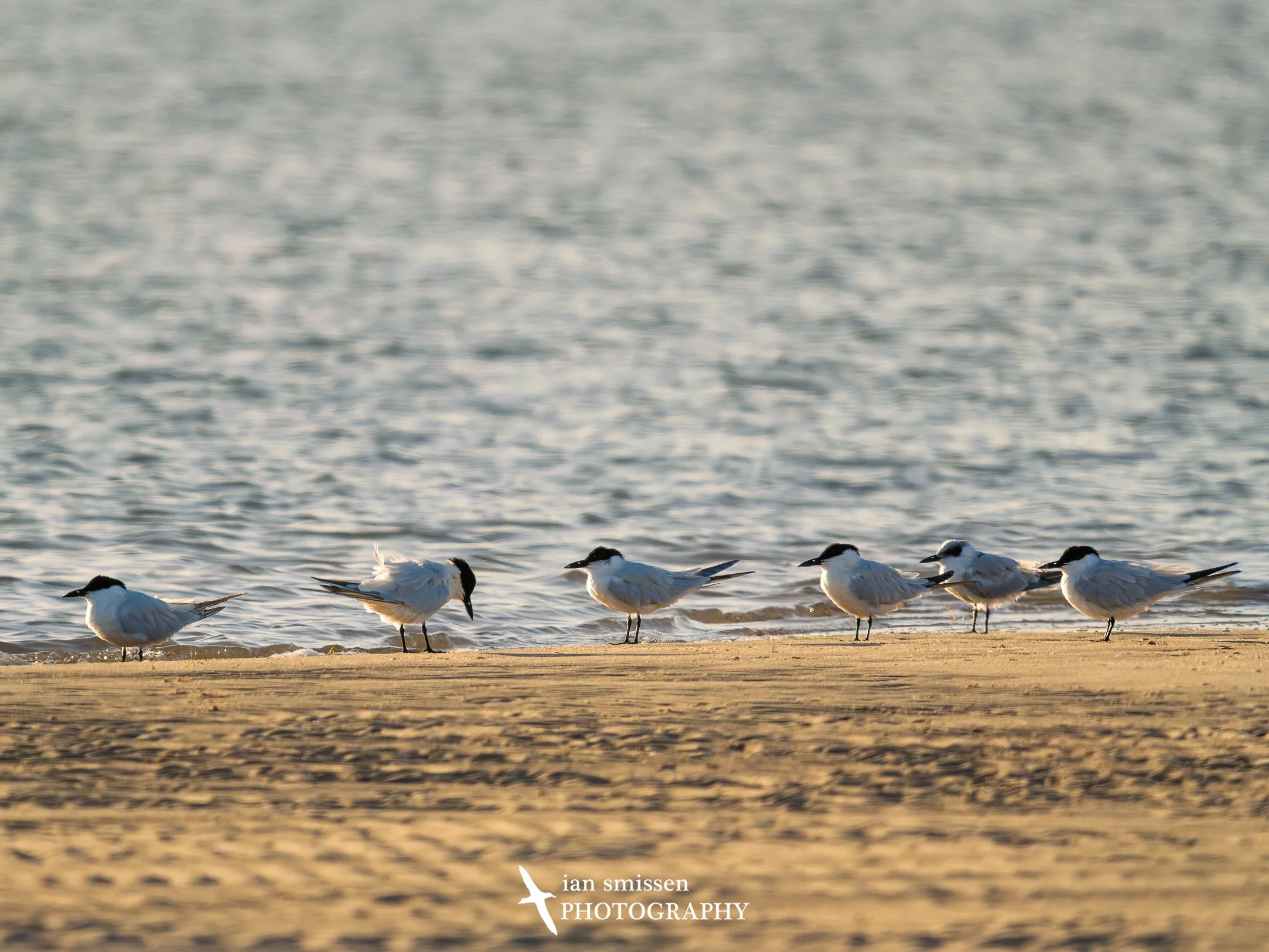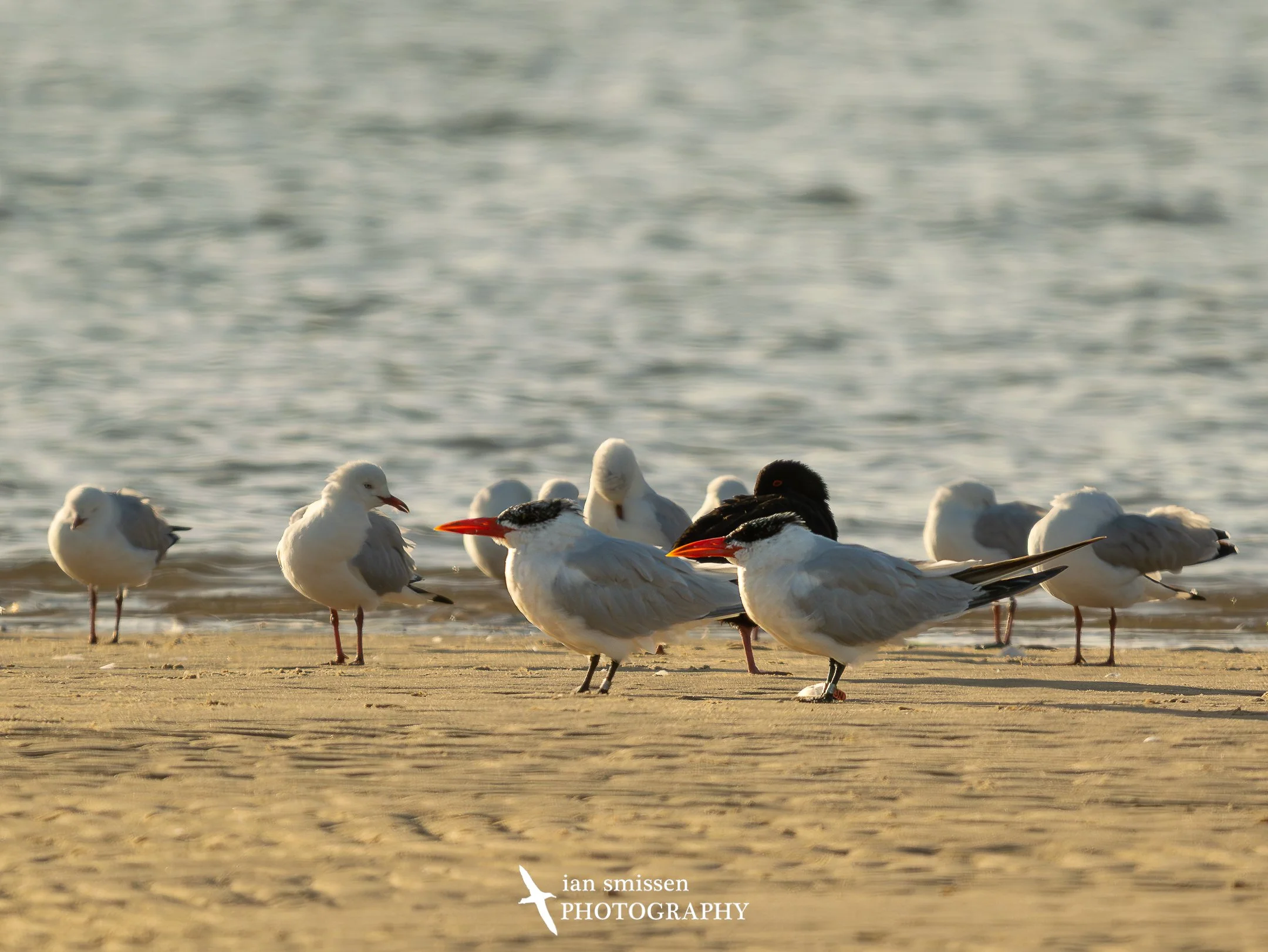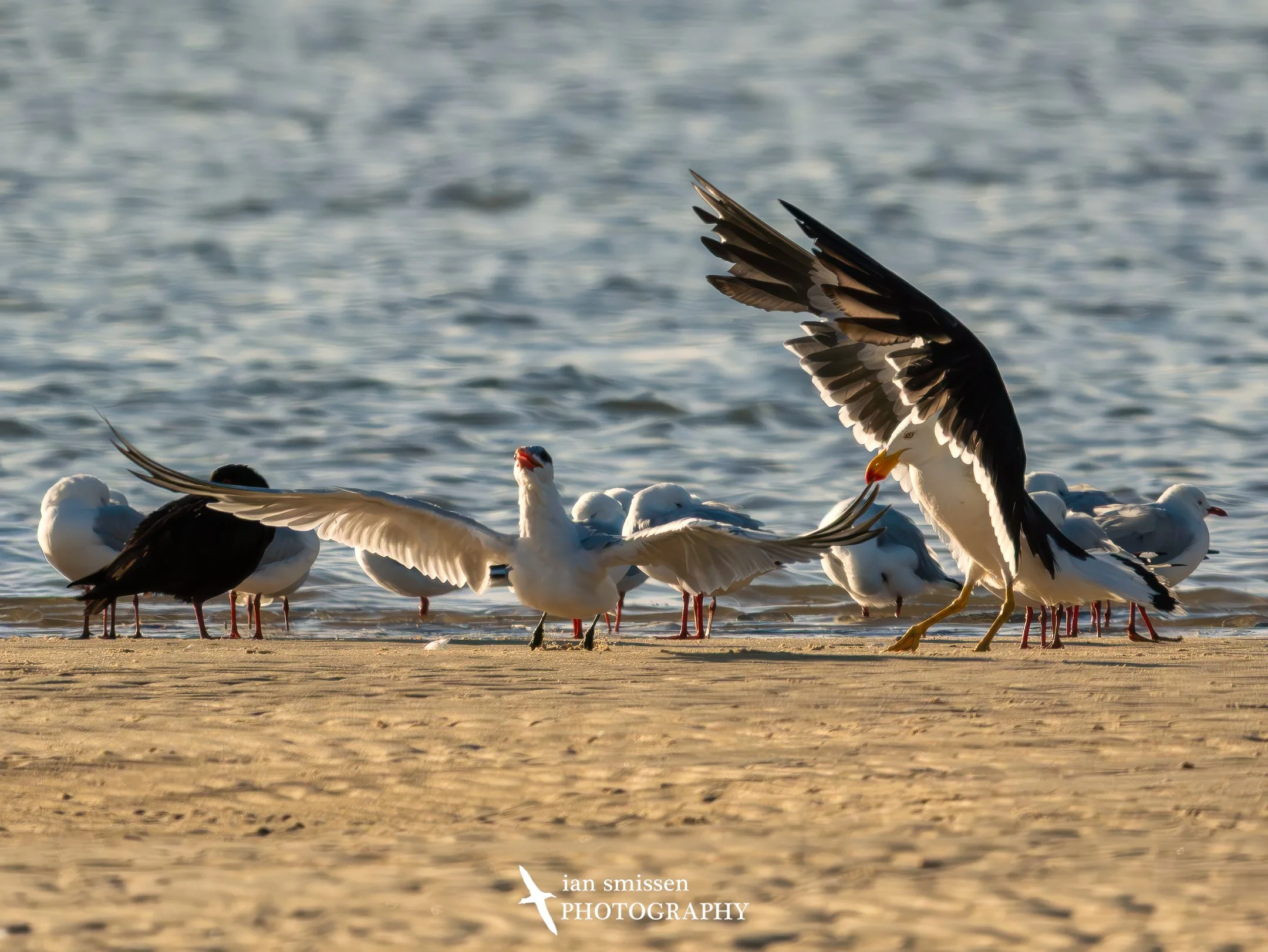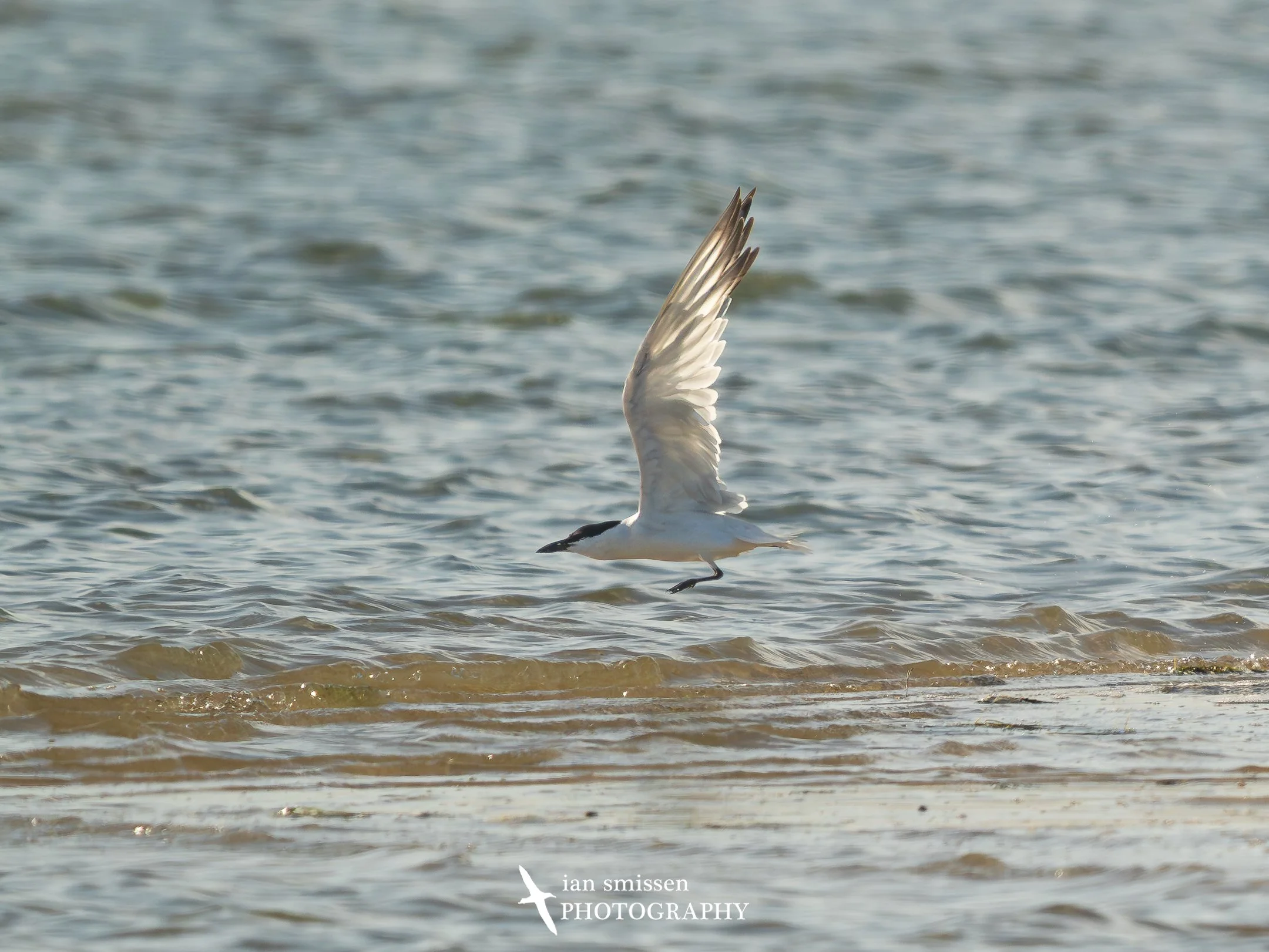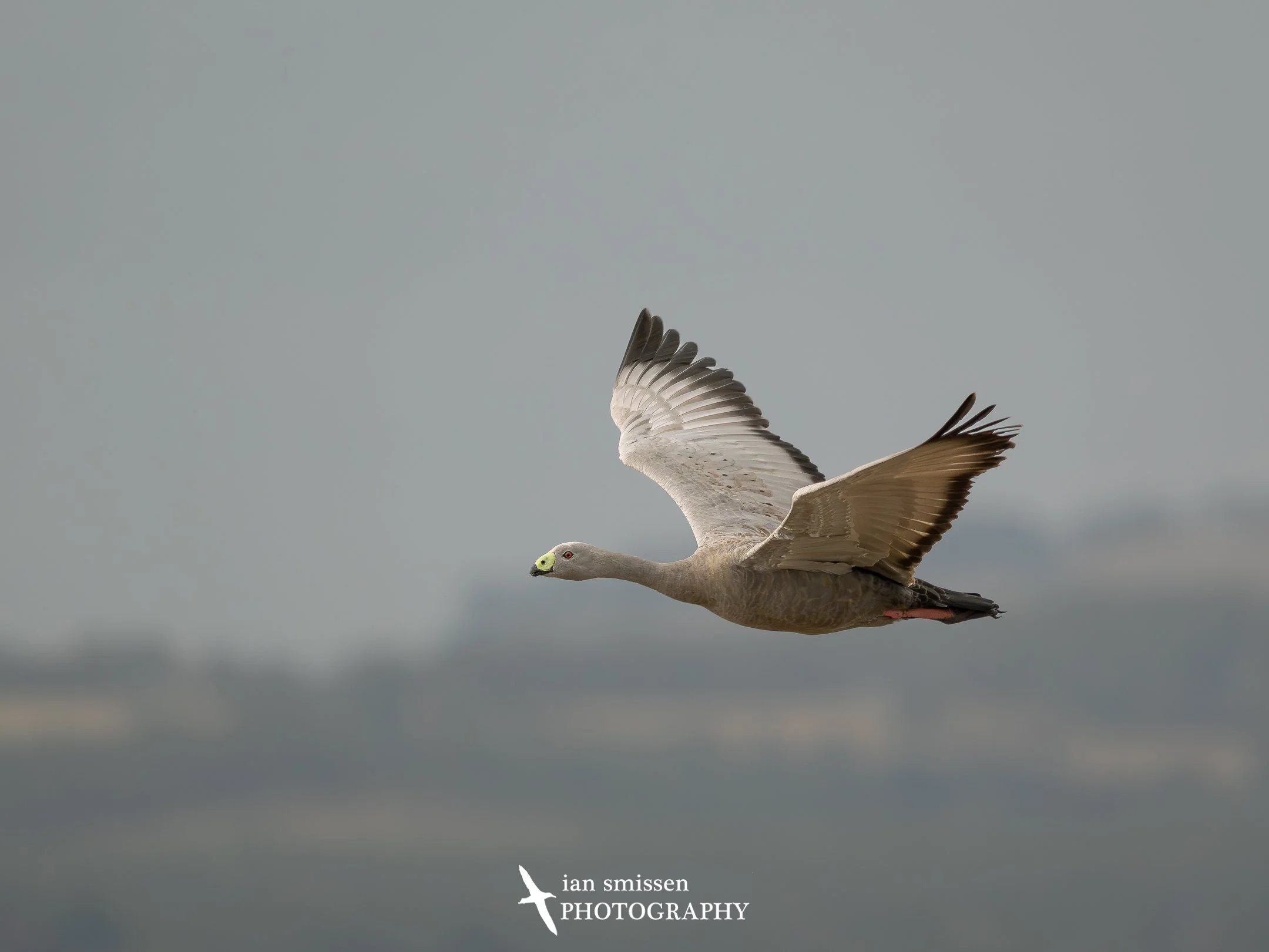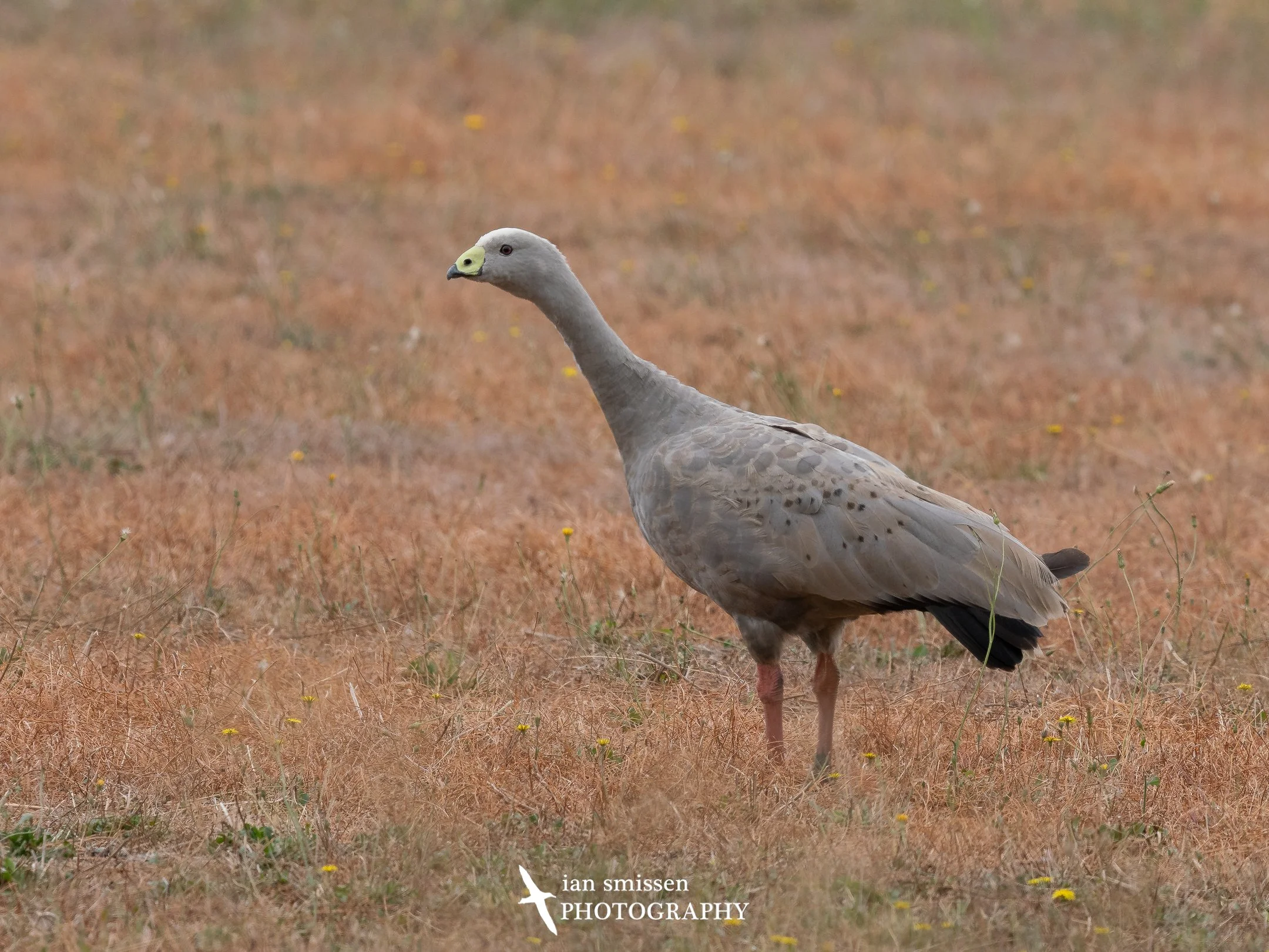
I spent a long weekend based in Swan Hill in NW Victoria with the Melbourne group of Birdlife Photography. We visited a range of locations in Kerang, Lake Bolac, Swan Hill, Sea Lake and surrounding areas.
Friday 16 October
Middle-Reedy Lake Ibis Rookery, Kerang
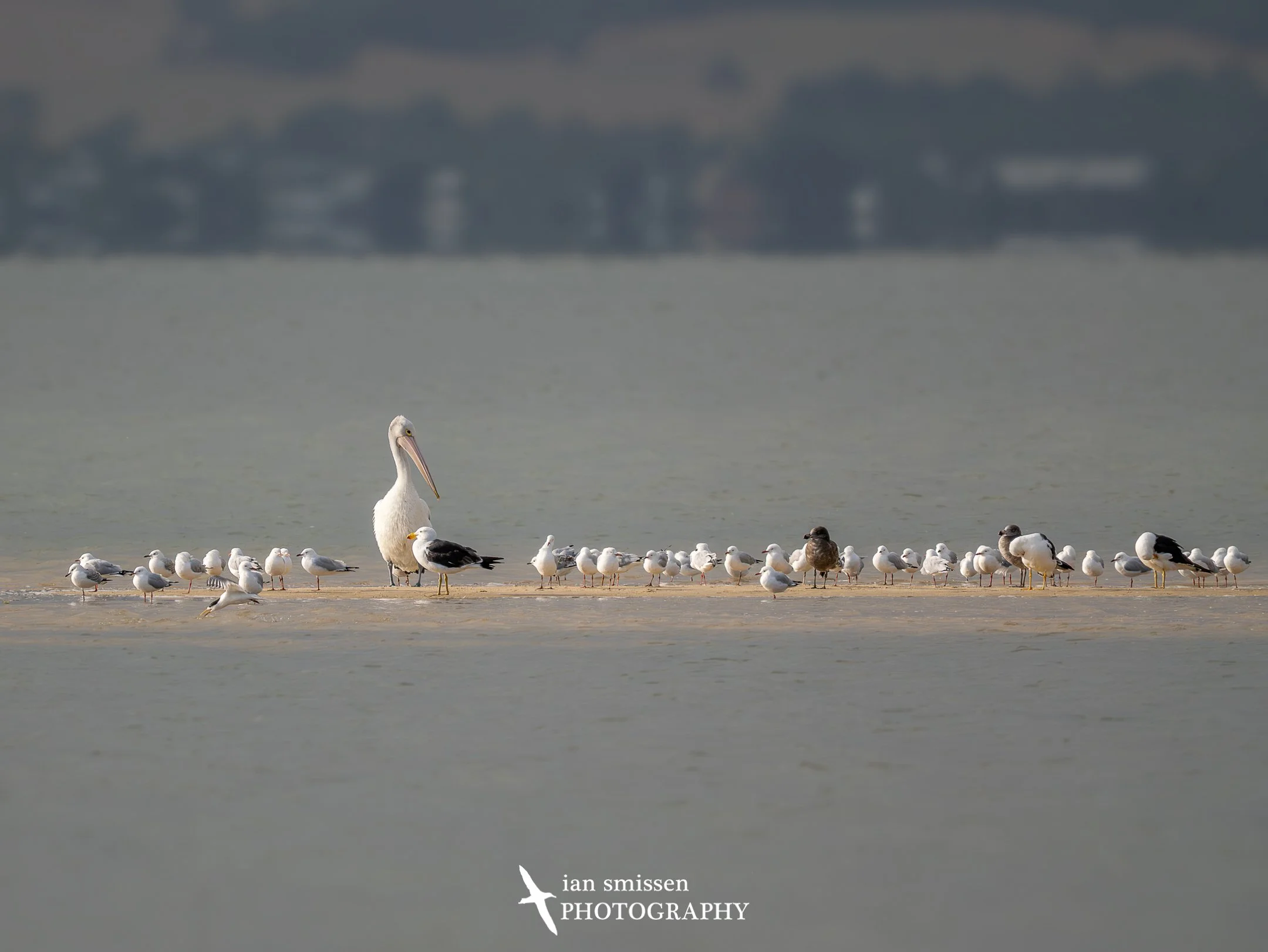
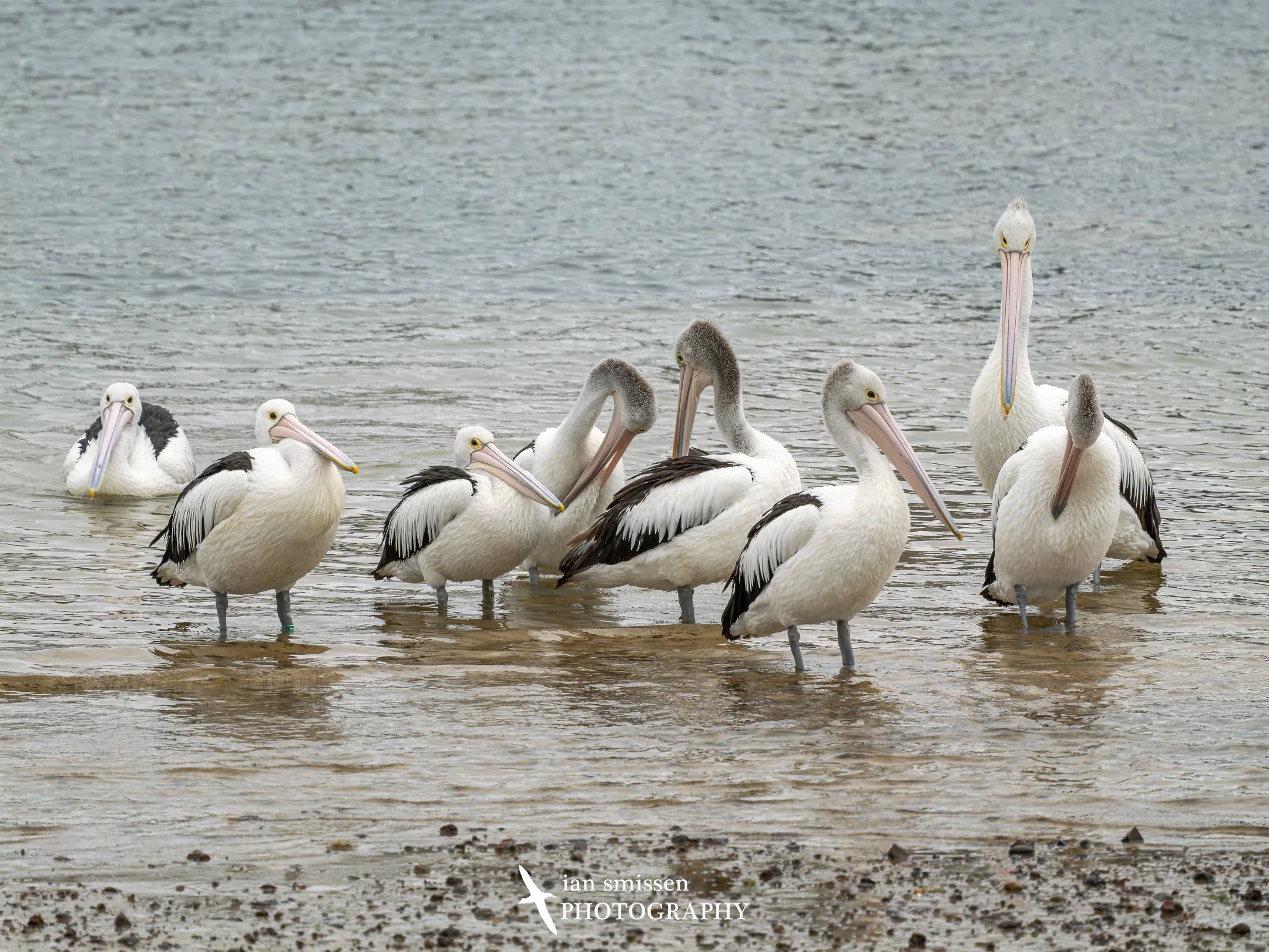
First stop was the ibis rookery at Middle-Reedy Lakes near Kerang. During the early afternoon most of the ibis were away feeding but there were still plenty of pelicans roosting on Middle Lake.
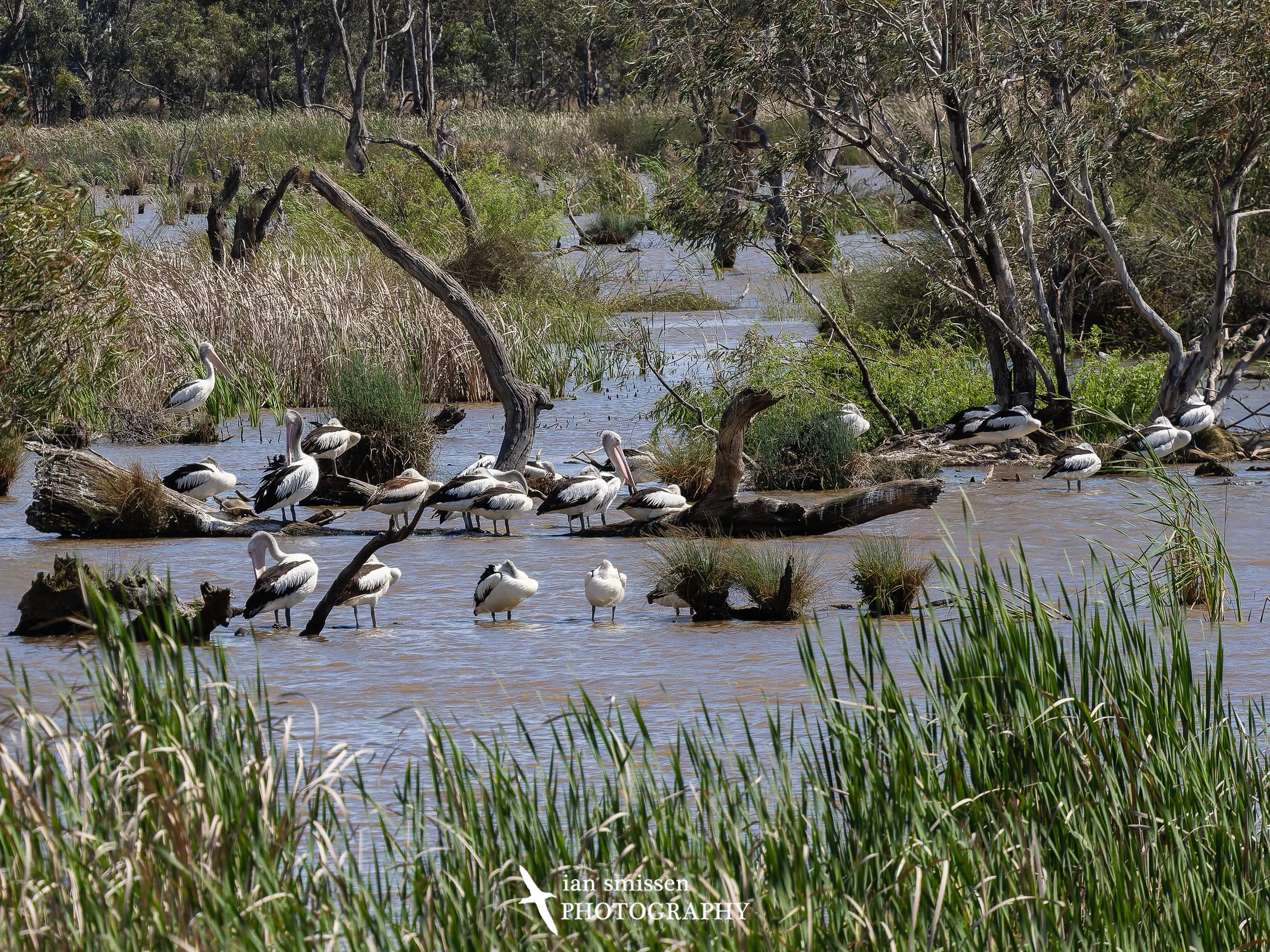
Australian Pelican
Middle Lake, Kerang Victoria
There were Black-tailed Native Hens galore at several sites visited over the weekend but I managed to get closest to one beside the road around Middle Lake. These birds are unusually flighty—running for cover at the slightest disturbance—so I photographed this one out of the van window.
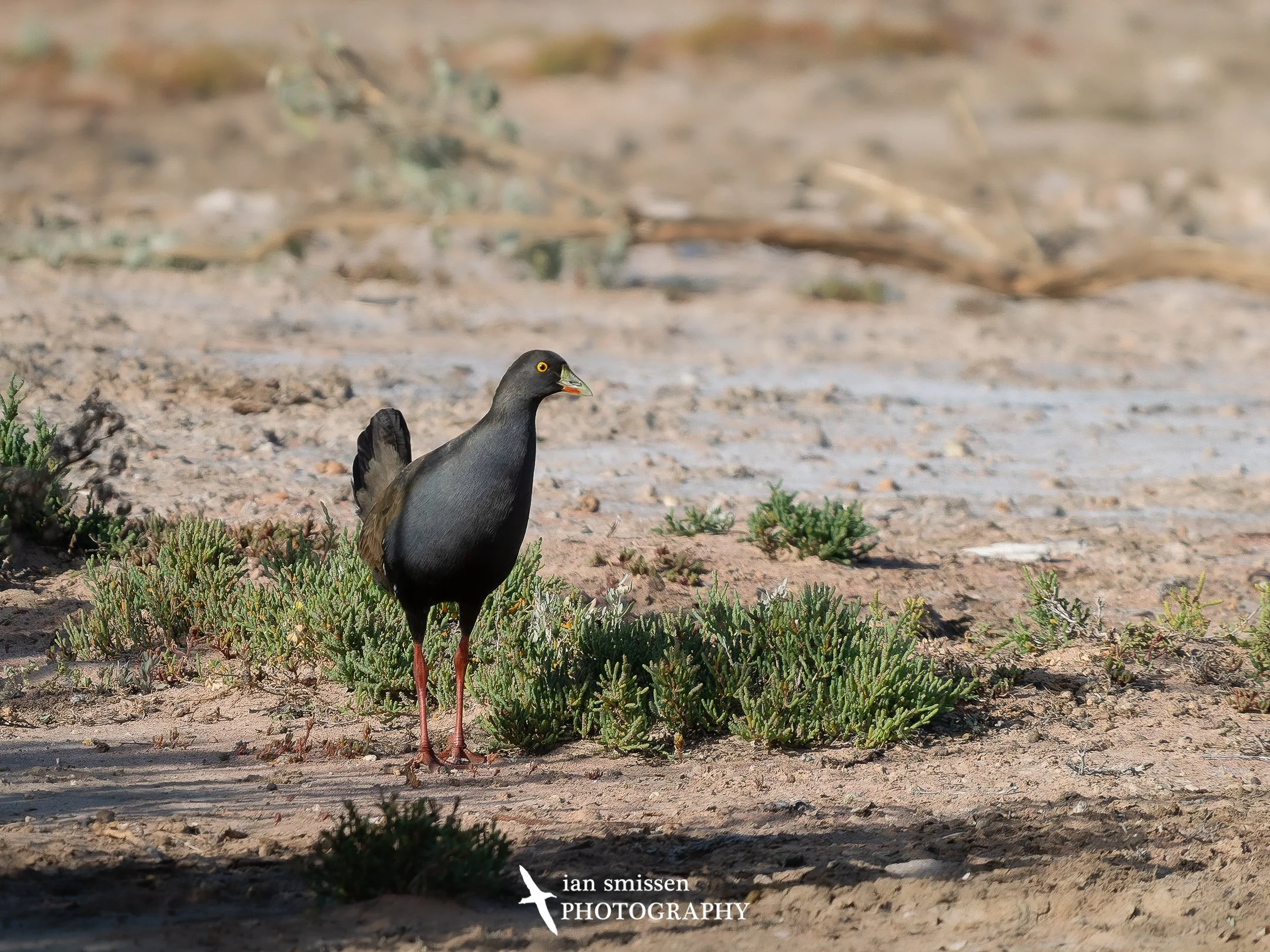
Black-tailed Native Hen
Middle Lake, Kerang, Victoria
A pair of babblers was feeding in the woodland near the car park. It was very dark and they spent most of the time hidden in the foliage but this one stopped on a branch in the sunlight for a few seconds.
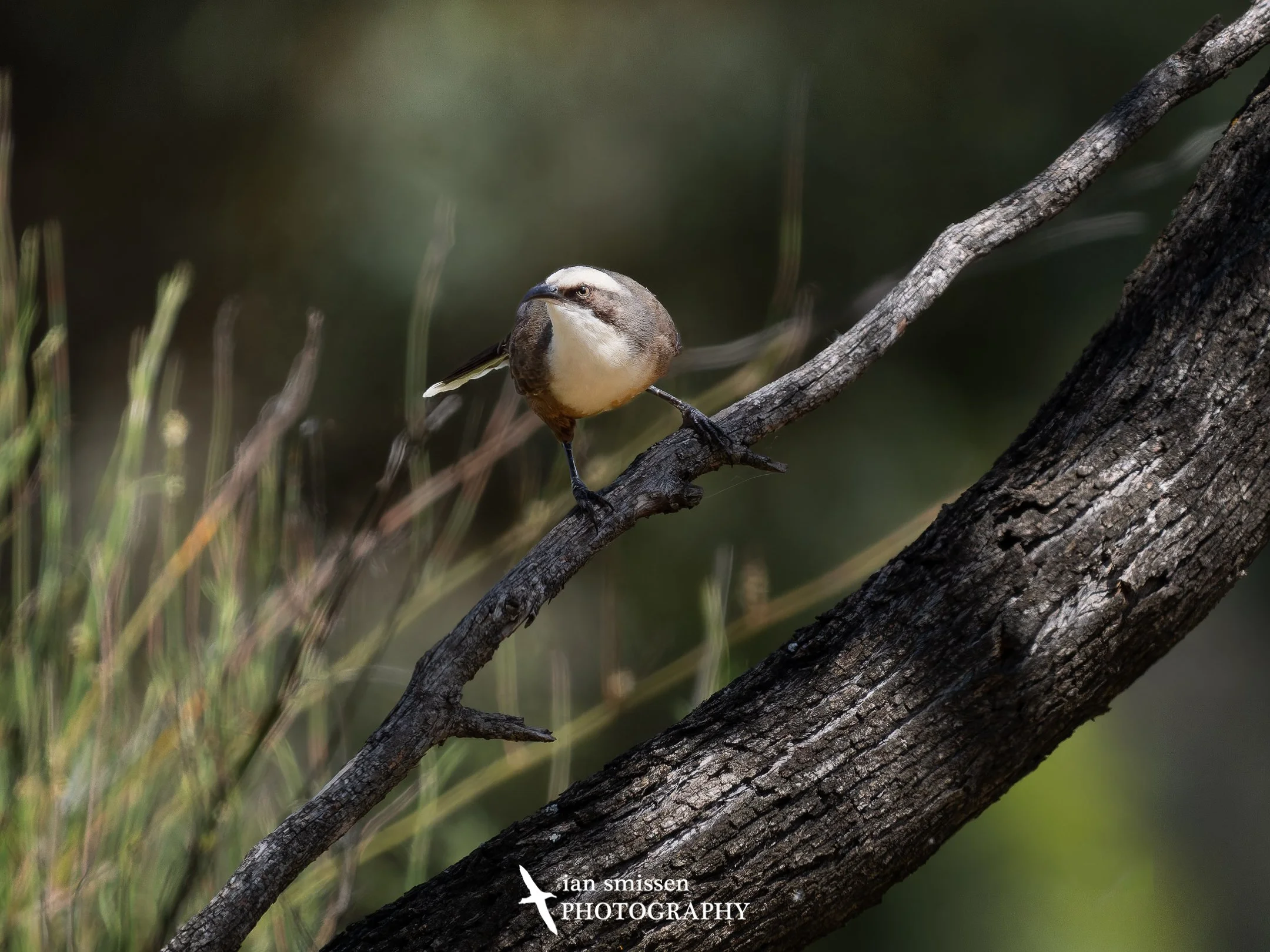
Grey-crowned Babbler
Middle Lake, Kerang, Victoria
Perhaps the highlight of the day was this Sacred Kingfisher. I found a pair flying back and forth along the channel near the car park and eventually this one landed on a branch close enough for a portrait.
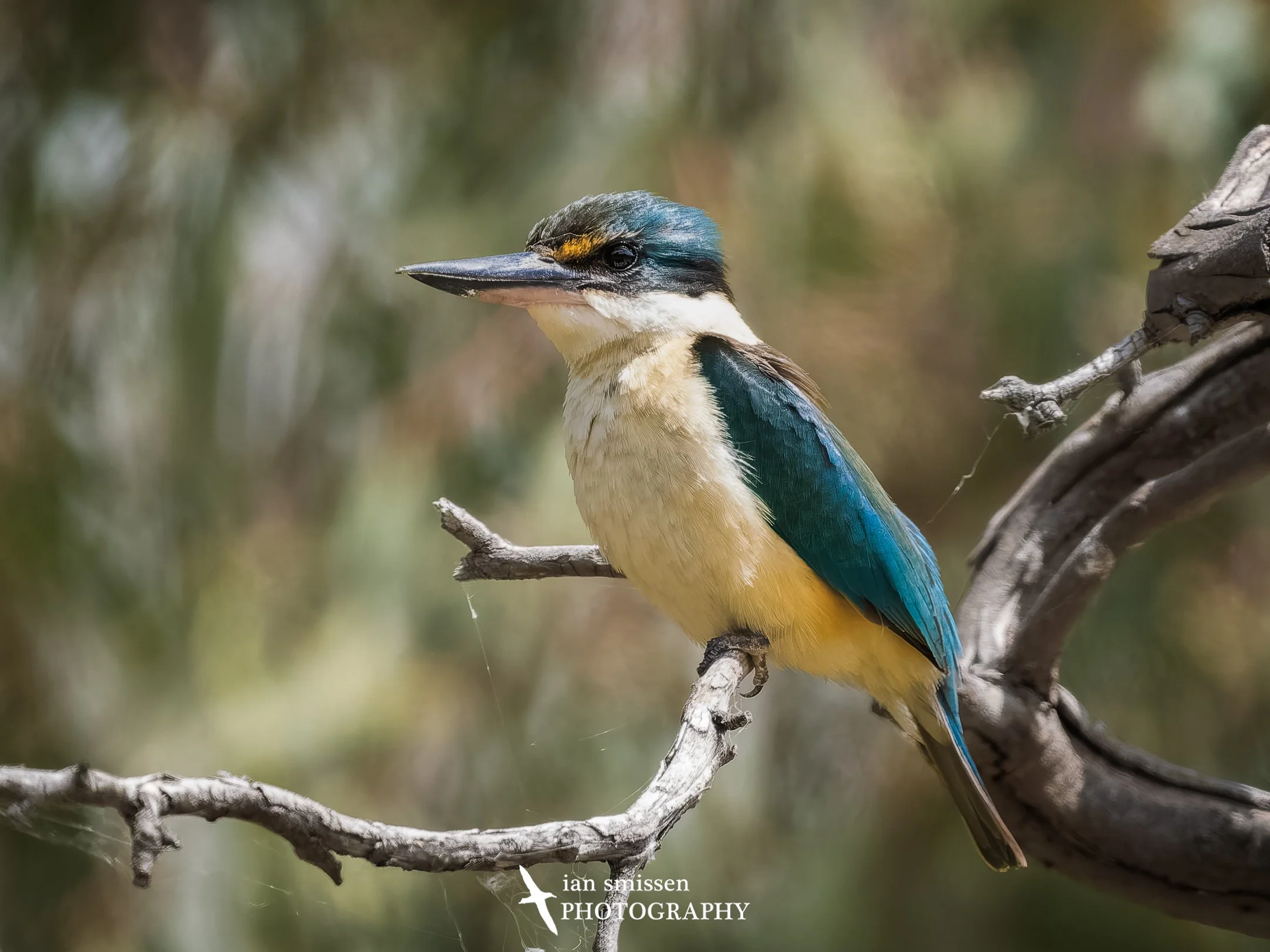
Sacred Kingfisher
Middle Lake, Kerang, Victoria
Lake Tutchewop
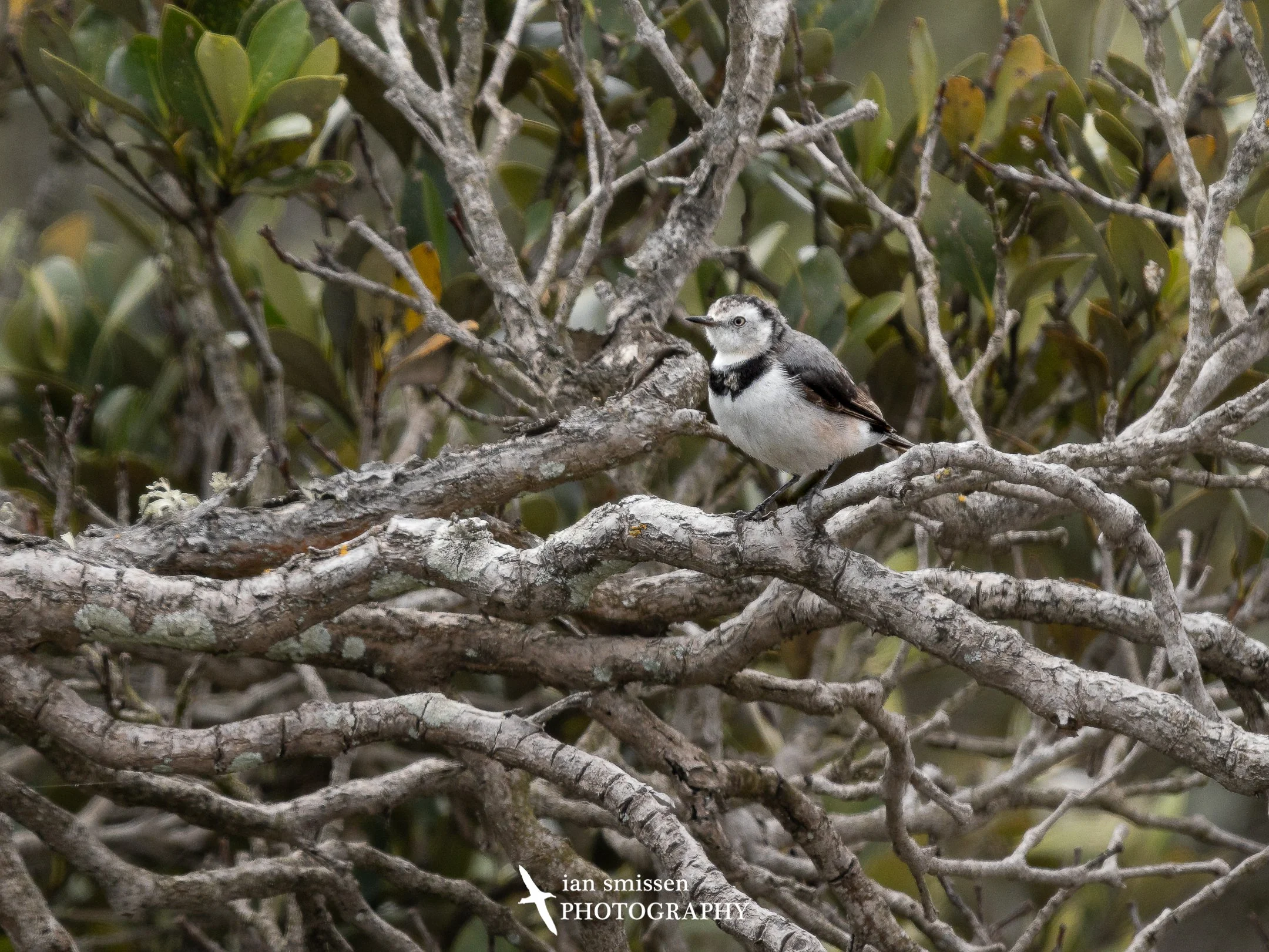
Next stop was Lake Tutchewop, primarily in search of White-winged Fairy-wren. We spent an hour or so searching and eventually found a male in full breeding plumage but it was on private property and about 100 metres away—far too distant for anything but a rudimentary record shot. I did, however, find this female who was much more co-operative, albeit backlit.
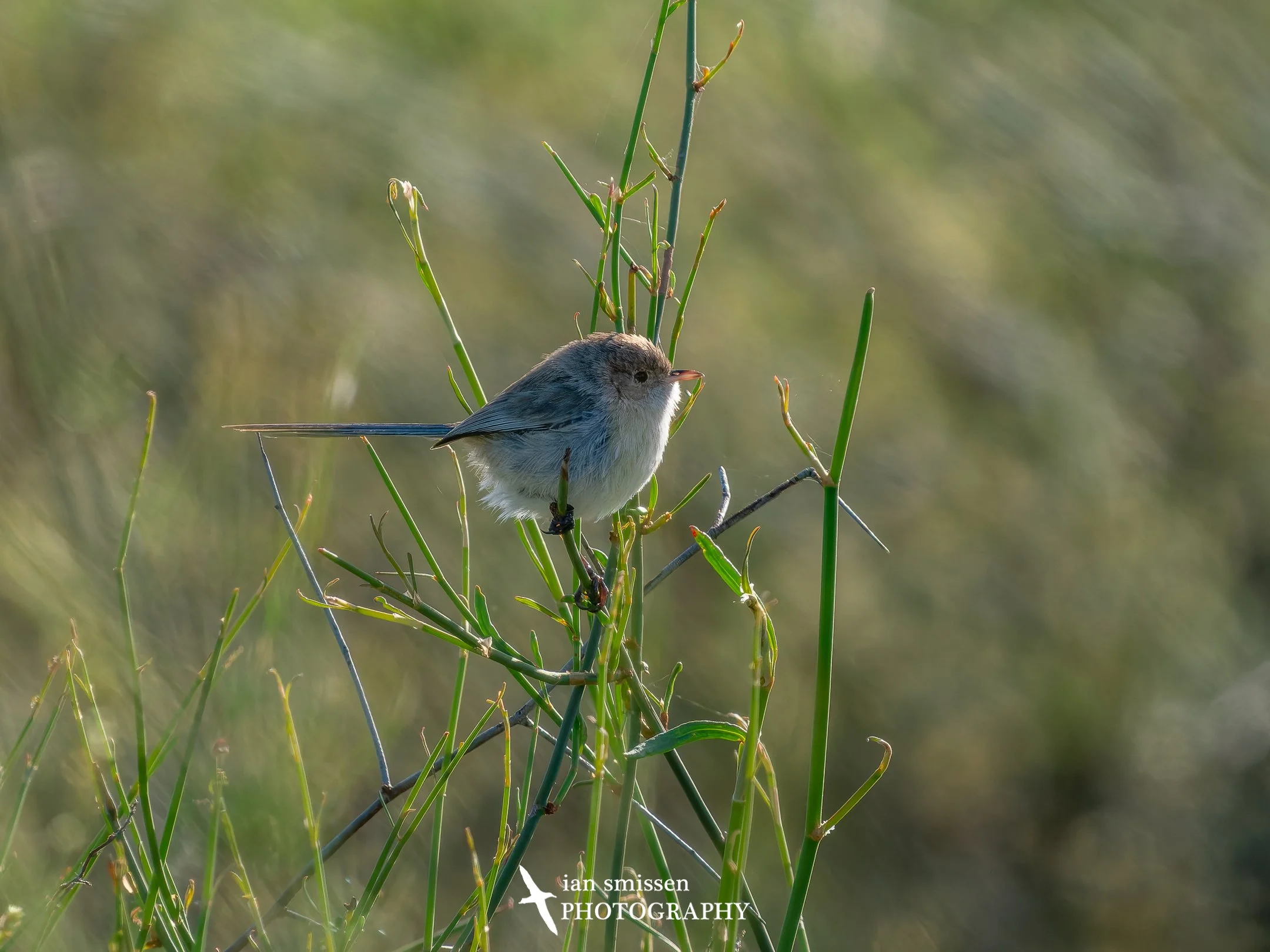
White-winged Fairy-wren (female)
Lake Tutchewop, Victoria
Saturday 17 October
Lake Tyrrell
Early morning and we drove to Lake Tyrrell near Sea Lake. While waiting for the full contingent to arrive, I spotted a Singing Honeyeater foraging in the bushes beside the car park. As I watched through the viewfinder, it grabbed a large moth and flew to the ground to ‘finish it off’.
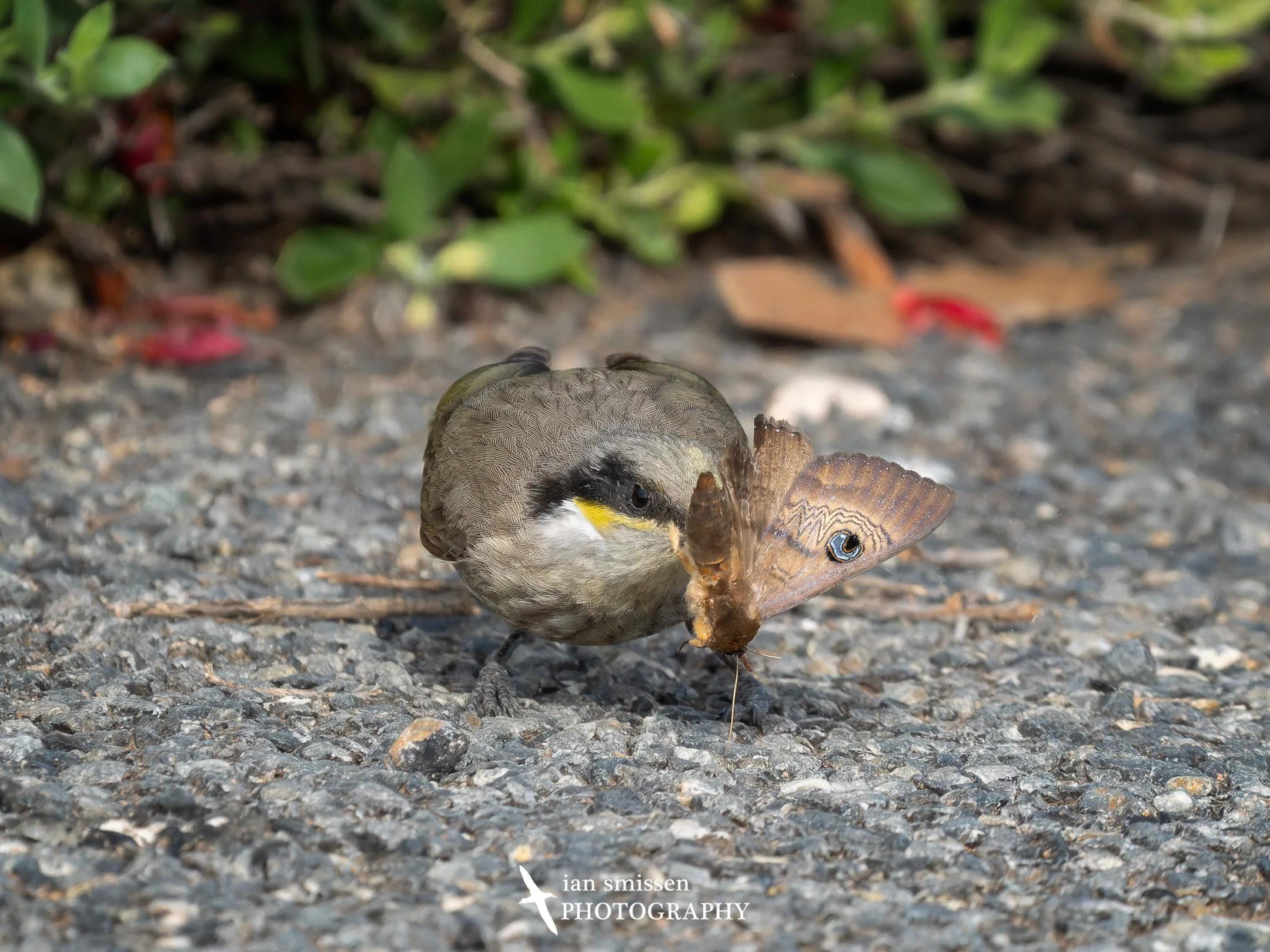
Singing Honeyeater and Southern Moon Moth
Lake Tyrrell, Sea Lake, Victoria
There wasn’t a lot of avian activity around the visitor centre and viewing platform so I headed out along “Lake Tyrrell Road” (actually a dry weather only rutted track along the southern shore of the lake) to a small open wooded area next to Robinvale-Sea Lake Road in search of Yellow-throated Miner and Purple-backed Fairy-wren. The latter would prove elusive for the whole weekend but the miners were there.
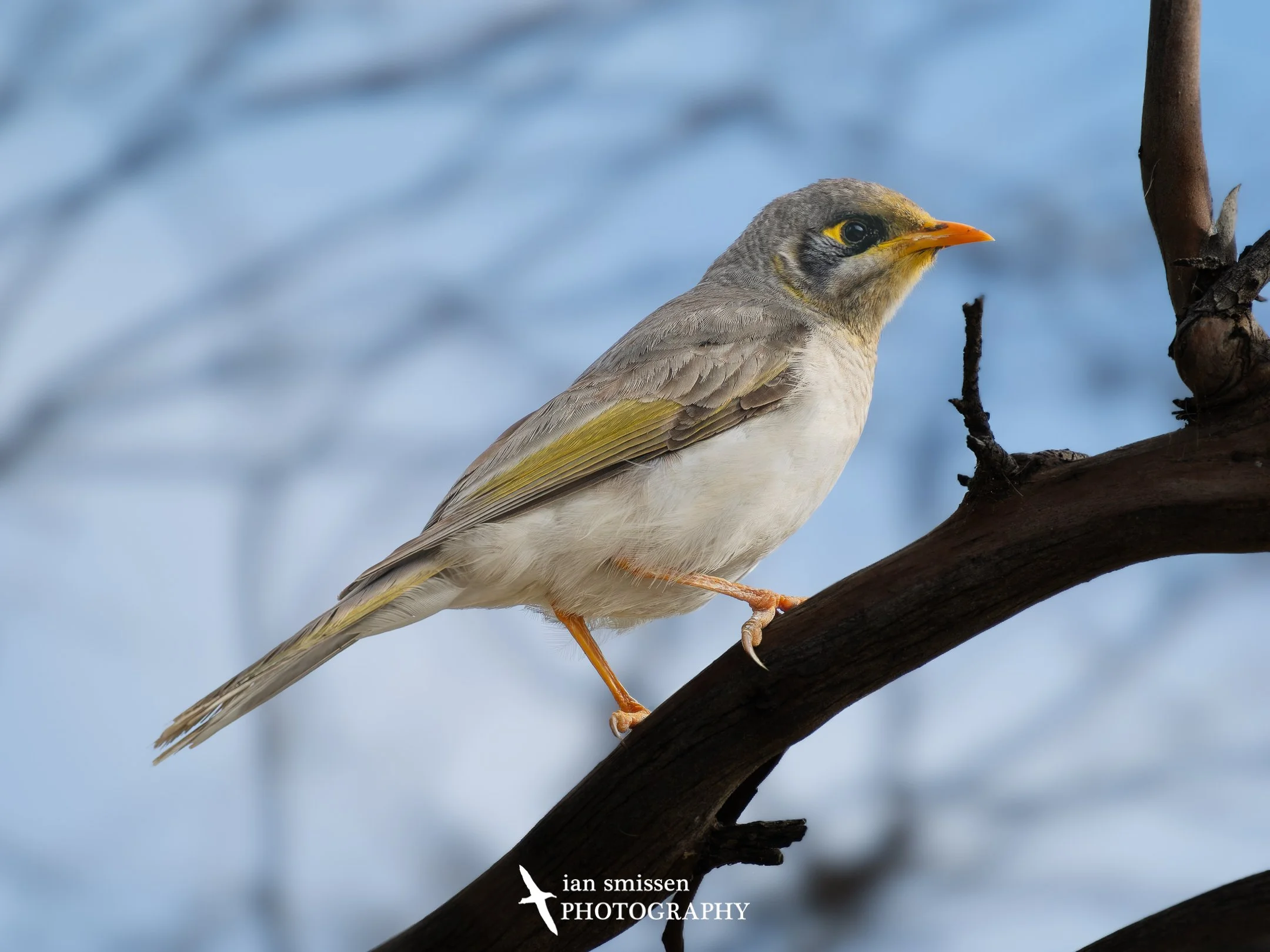
Yellow-throated Miner
Lake Tyrrell, Sea Lake, Victoria
Also there were several Black Kite flying overhead. These birds are the most common raptors in country Victoria and are great for photography because they are not easily spooked and fly low to the ground enabling good close-up opportunities.
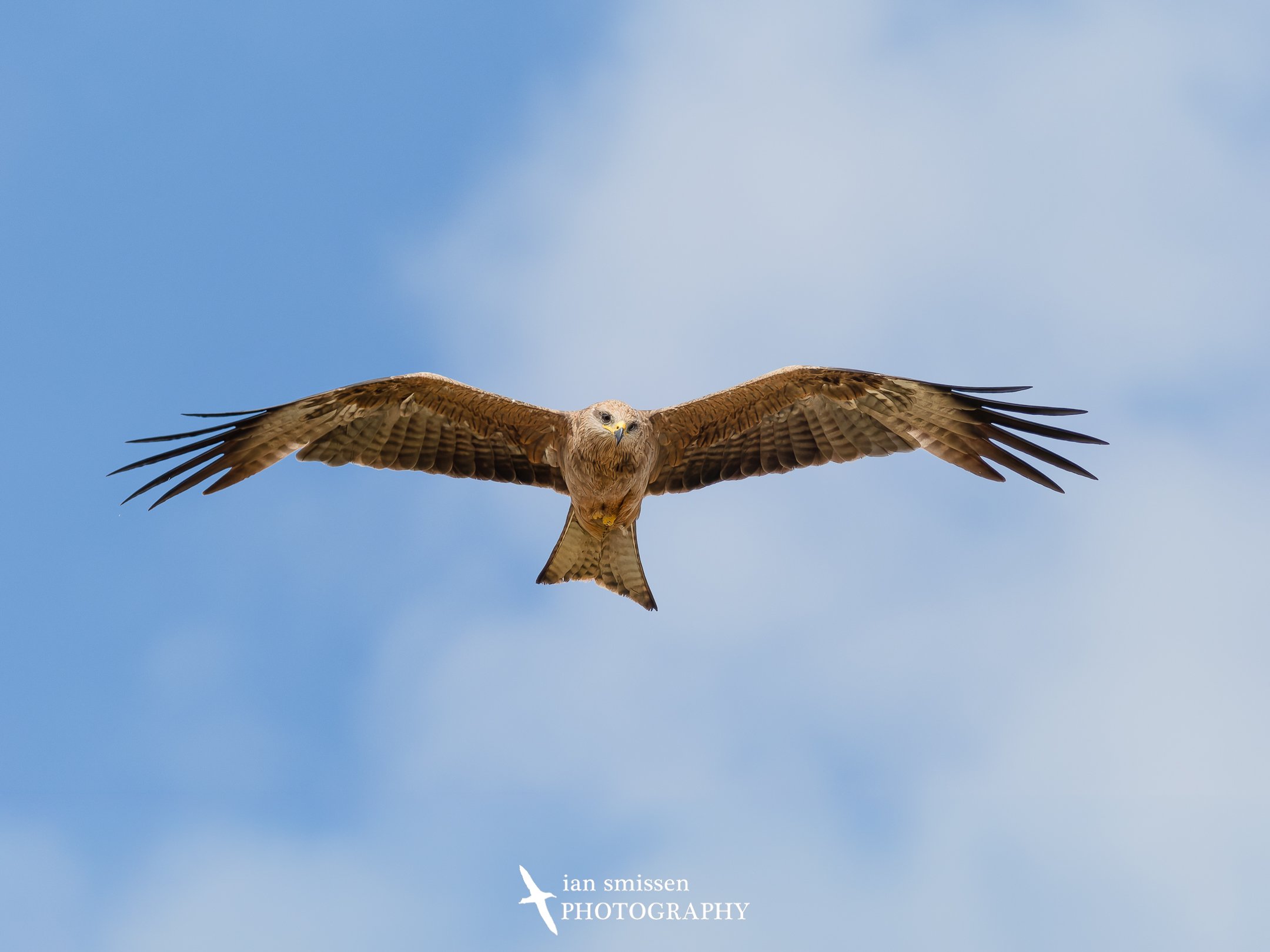
Black Kite
Lake Tyrrell, Sea Lake, Victoria
Green Lake Regional Park
Next stop was Green Lake Regional Park, south of Sea Lake. I had driven past this location many times but never stopped and I was pleasantly surprised at the camping facilities and birding opportunities. Definitely on the list for the next trip to NW Vic.
There were several species of ducks including Pacific Black Duck, Grey and Chestnut Teal but the highlight was a pair of shelducks.
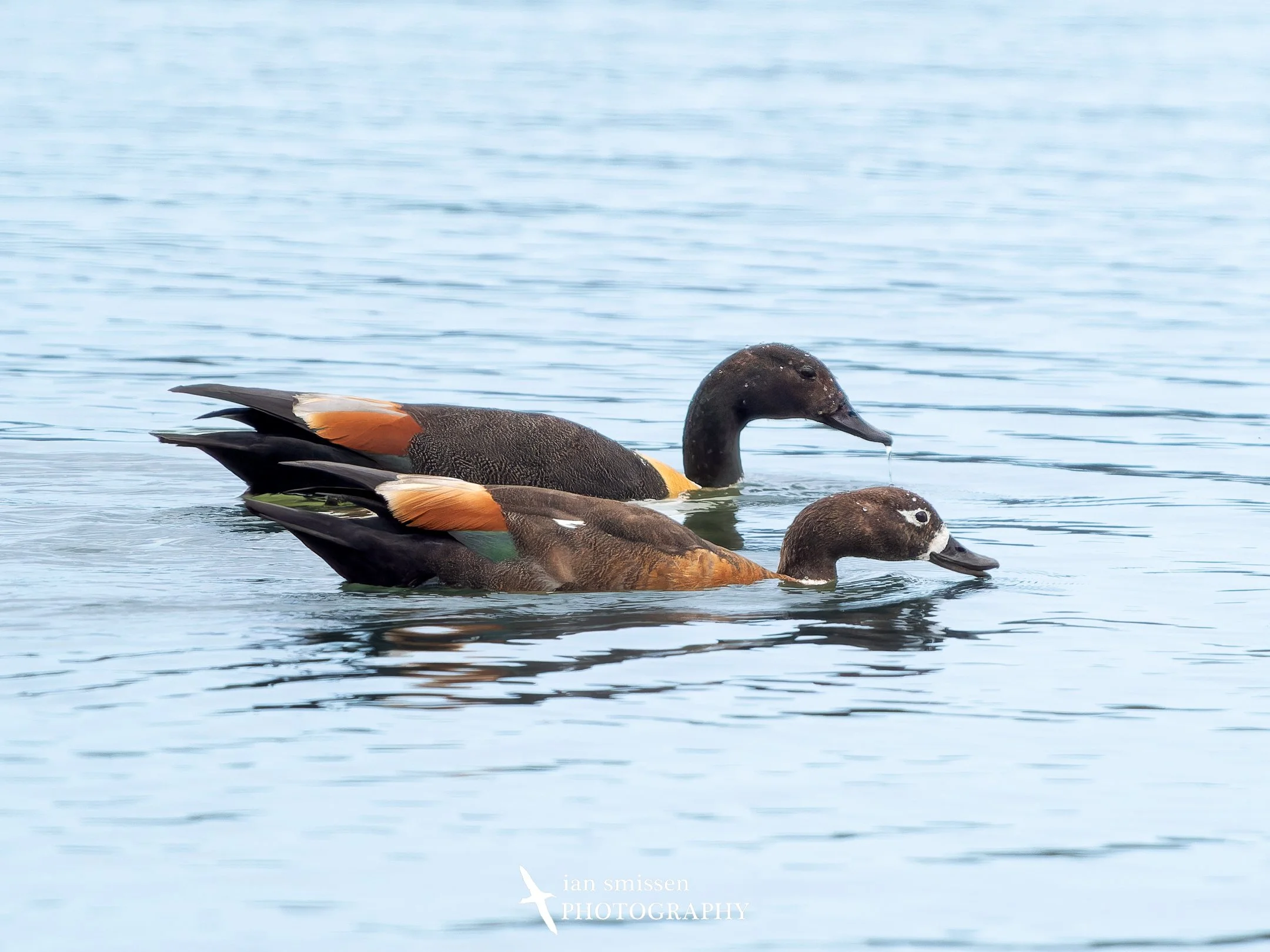
Australian Shelduck (male and female)
Green Lake, near Sea Lake, Victoria
Plenty of Black-tailed Native Hen but, as usual, very wary and, despite my careful stalking and photographing through foliage, this little bunch managed to stay more than 100 metres away.
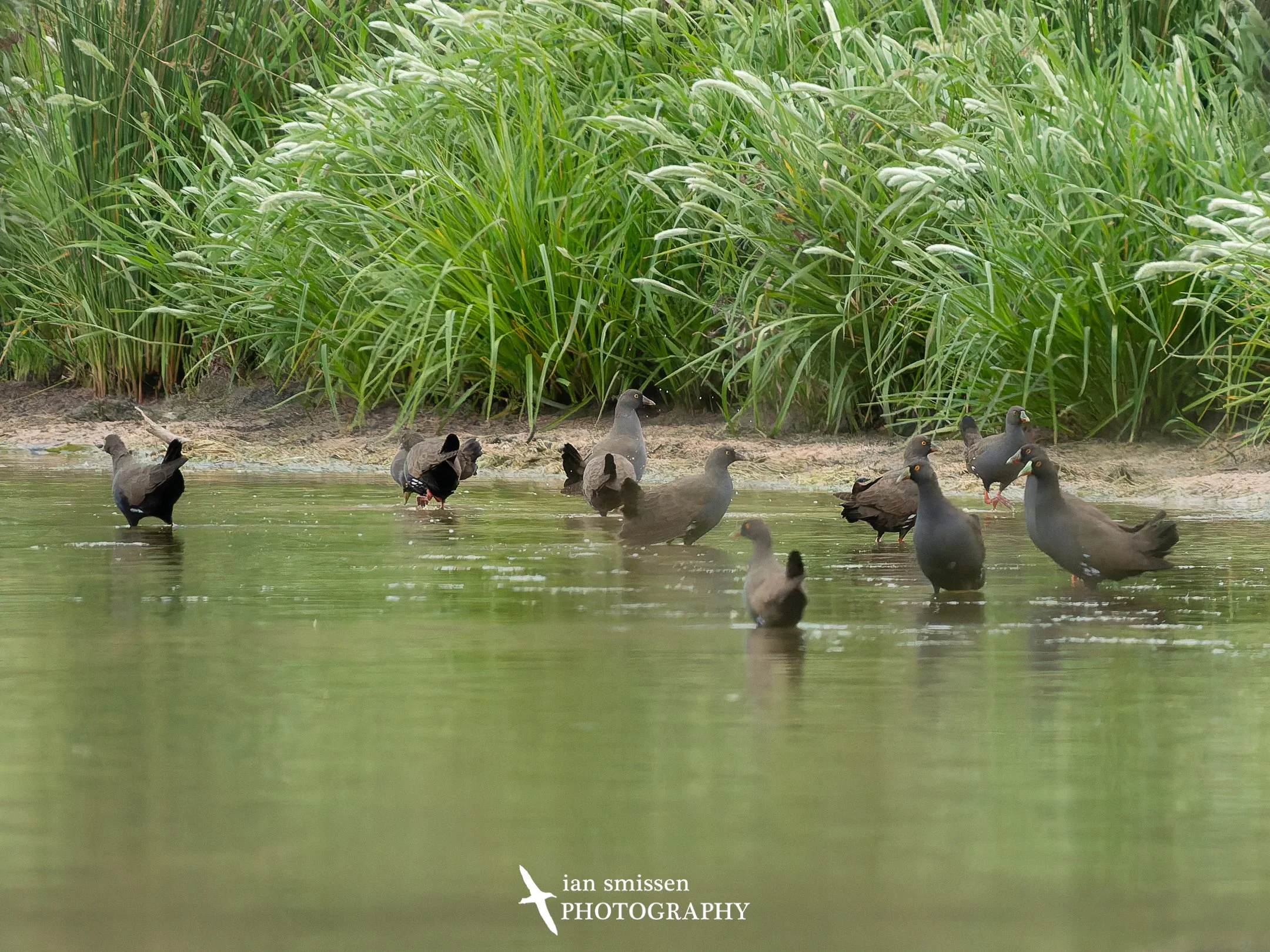
Black-tailed Native Hen
Green Lake, near Sea Lake, Victoria
The highlight on my walk around the lake was coming across this little huddle of Hoary-headed Grebe.
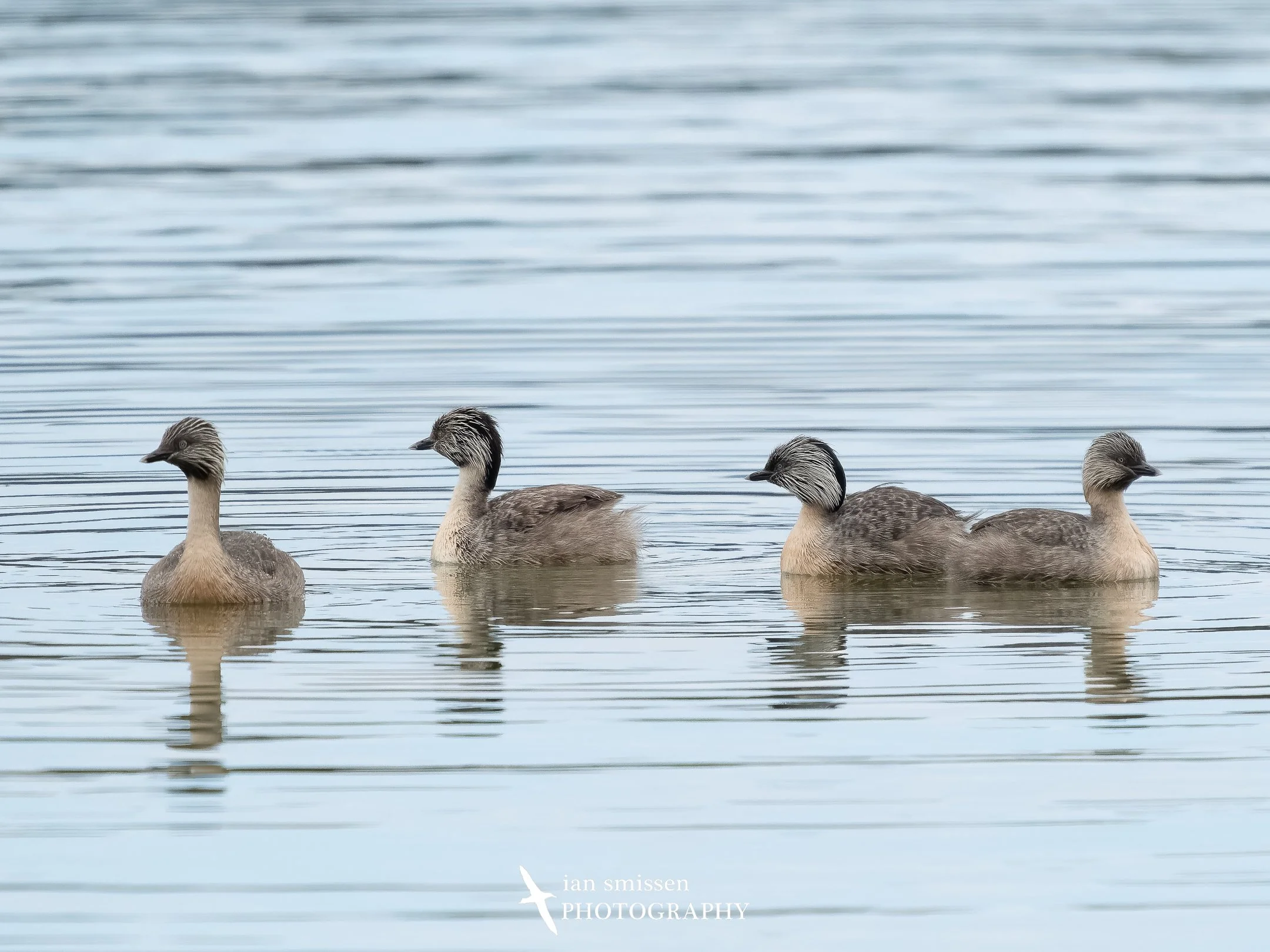
Hoary-headed Grebe
Green Lake, near Sea Lake, Victoria
Woorinen South Bushland Reserve
Last stop for the day was another spot I’d never been to: Woorinen South Bushland Reserve. This small reserve next to the small town from which it derives its name, provided a pleasant short walk, the avian highlight of which was this pair of pardalotes.
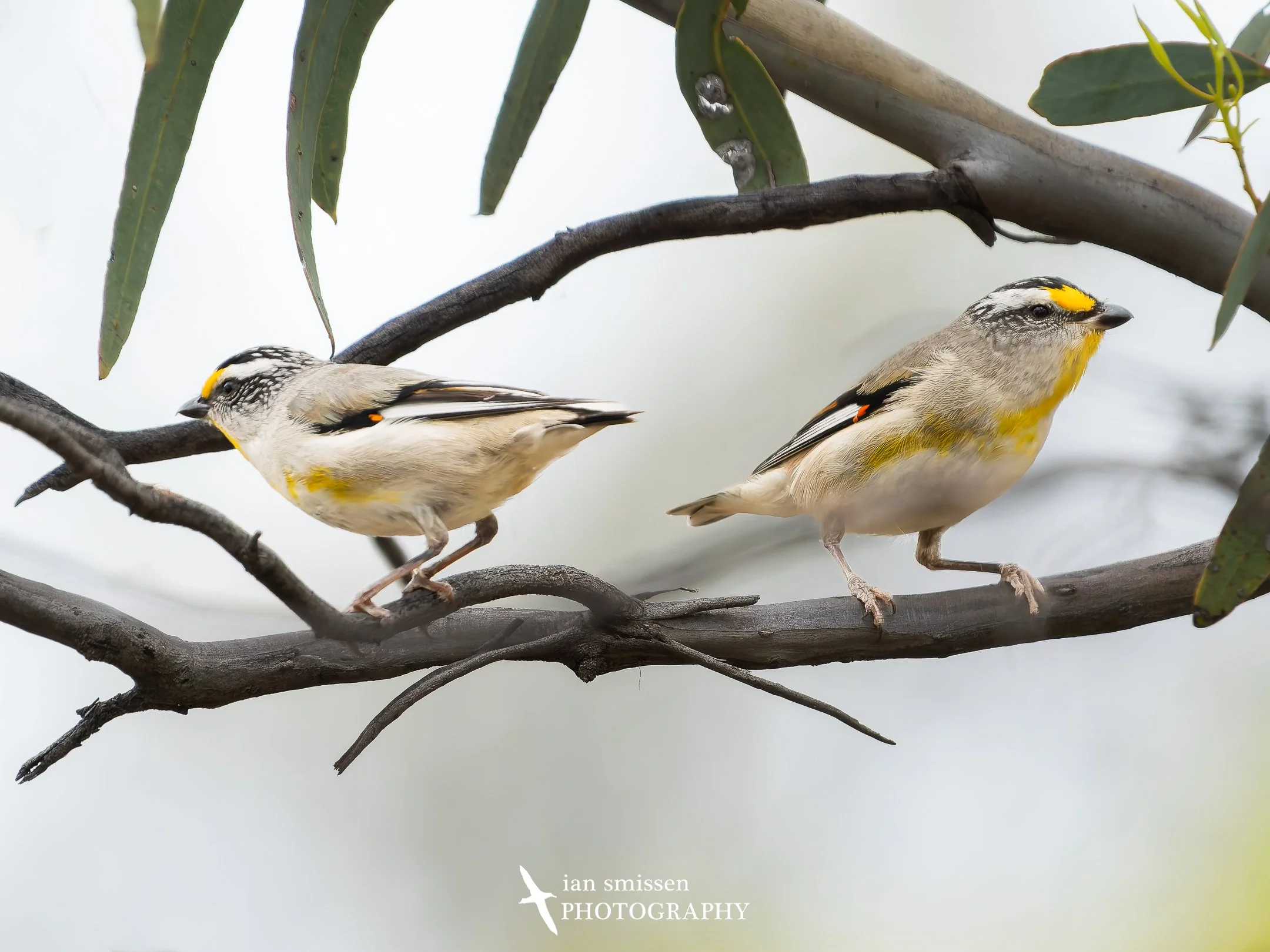
Striated Pardalote
Woorinen South Bushland Reserve, Victoria
Sunday 18 October
Goschen Bushland Reserve
Sunday morning was spent at the compulsory Goschen Bushland Reserve, west of Lake Boga. This remnant native bushland is famous for its avian diversity and the number of inland birds that appear in spring and summer. We expected to find plenty of woodswallows—usually Dusky, which on this day were absent—but there were several White-browed Woodswallows flying around and occasionally perching for a portrait. Arguably the prettiest wood swallow, they are less common in Victoria than several other species so it was good to see them.
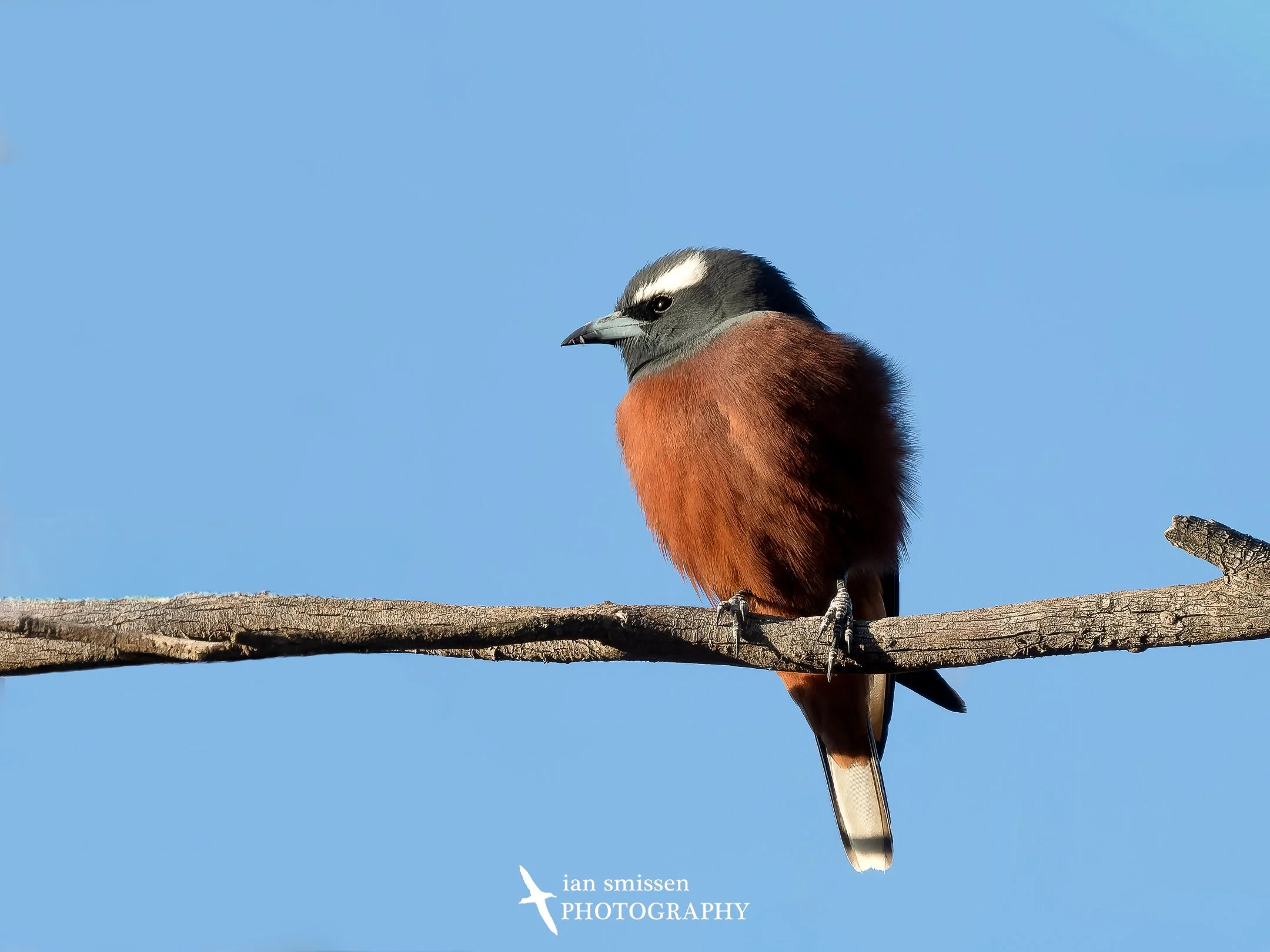
White-browed Woodswallow (male)
Goschen Bushland Reserve, Victoria
Goschen is perhaps most famous for its resident population of Brown Treecreepers and there were plenty around.
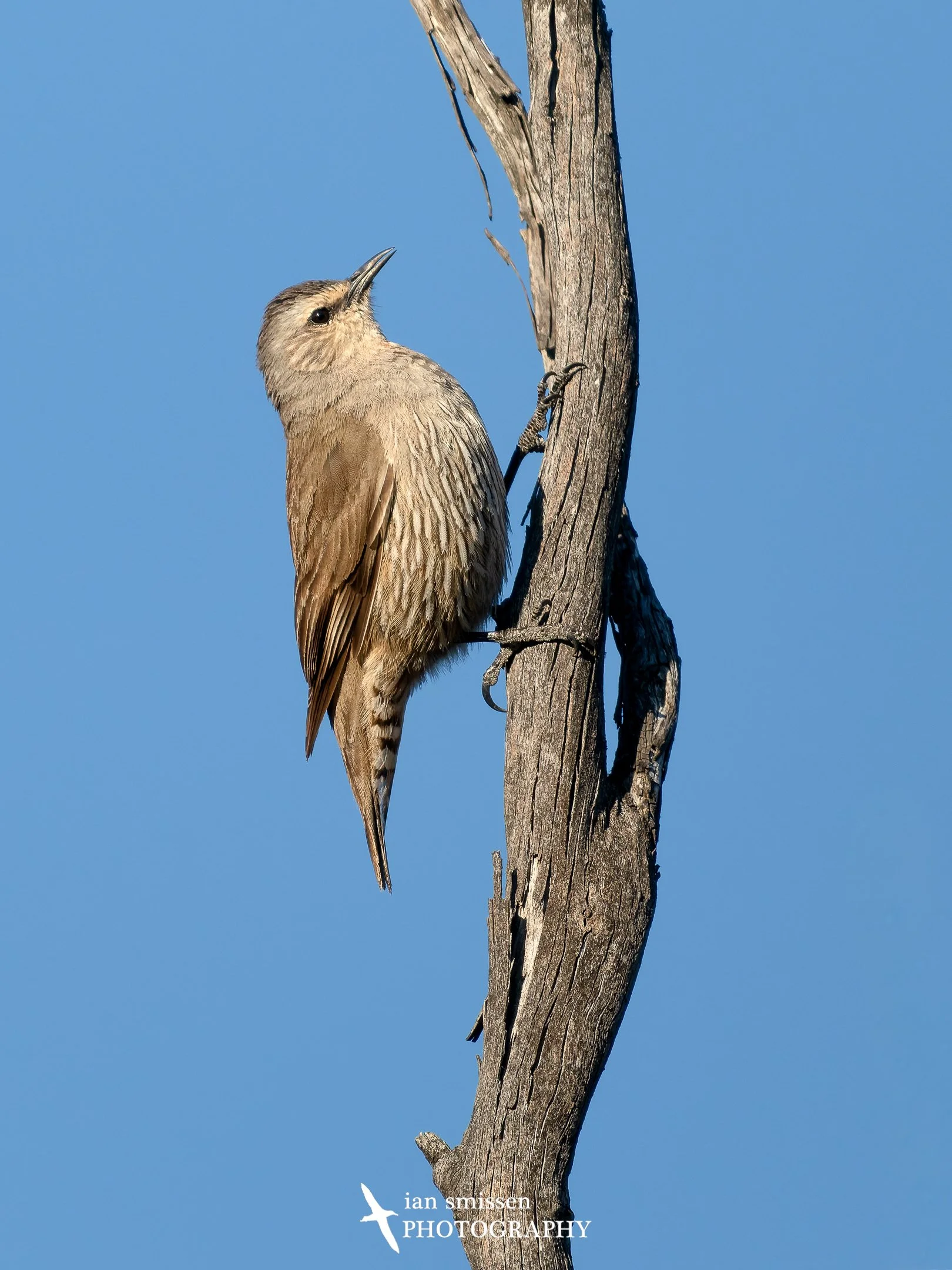
Brown Treecreeper
Goschen Busland Reserve, Victoria
Two small inland parrots—Budgerigar and Cockatiel—had been seen at Goschen in the previous few days. We didn’t manage to spot any ‘budgies’ but were delighted to find Cockatiel feeding on the ground. Awkward to photograph but great to see!
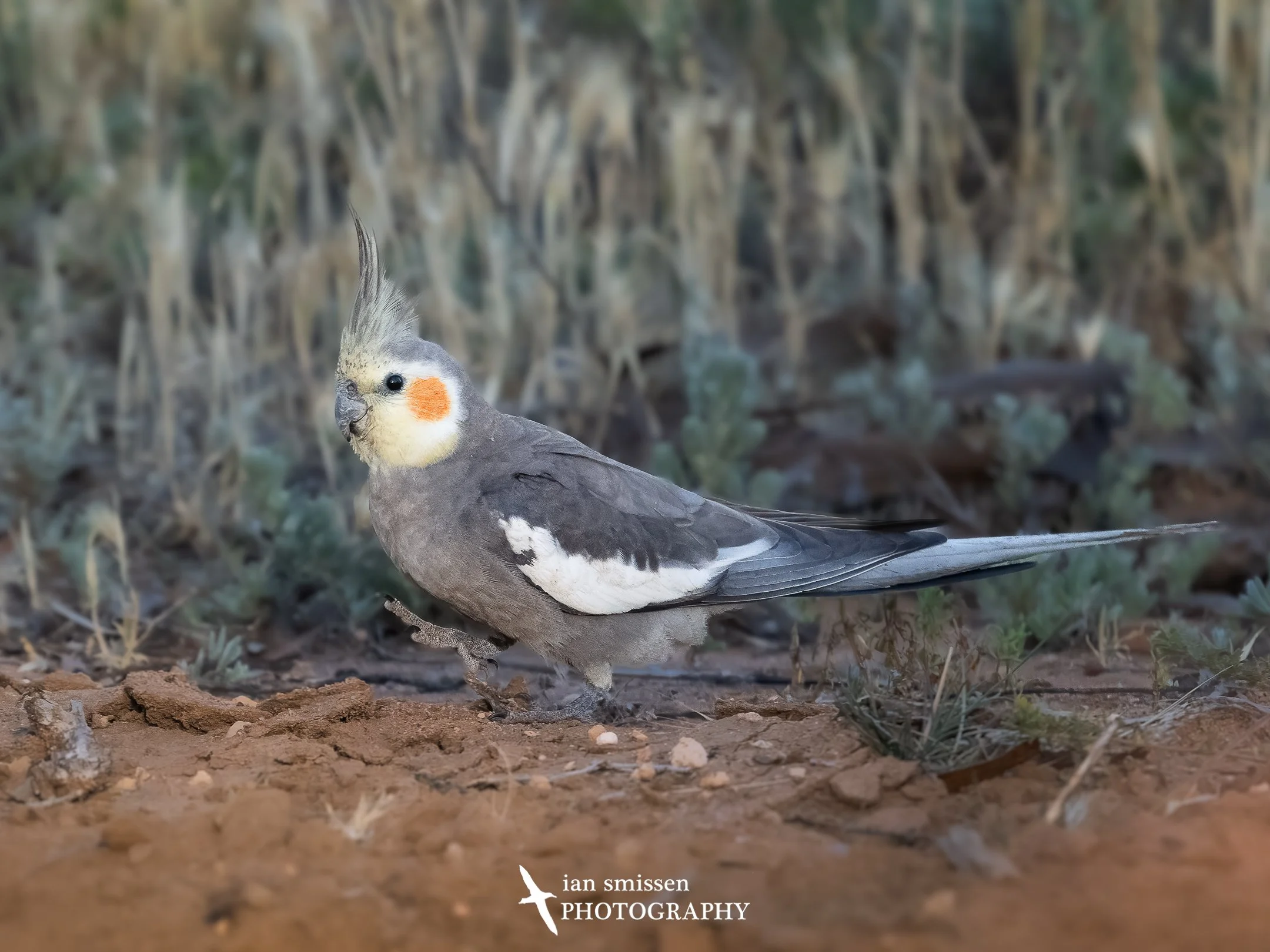
Cockatiel (male)
Goschen Bushland Reserve, Victoria
Expected to be seen at this time of the year, but always a delight, there were several pairs of bee-eaters spotted.
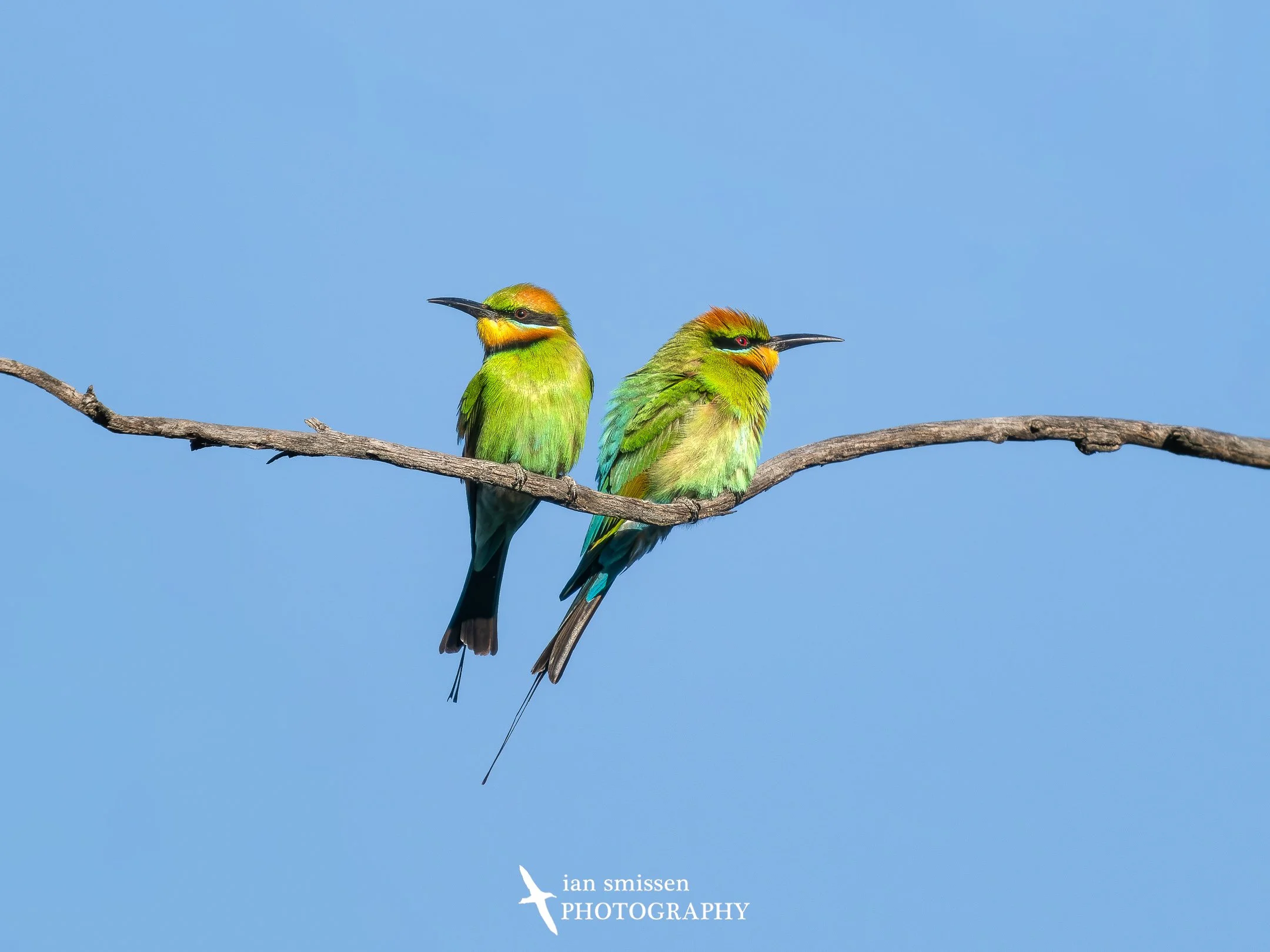
Rainbow Bee-eater (female (L) and male (R))
Goschen Bushland Reserve, Victoria
Lake BOGA
Famous for being the home of the Catalina Flying Boats during WWII, Lake Boga is also a pleasant place for a picnic, camping and birdwatching. We had lunch at the picnic spot on the south shore of the lake and were entertained by Whiskered Terns flying by.
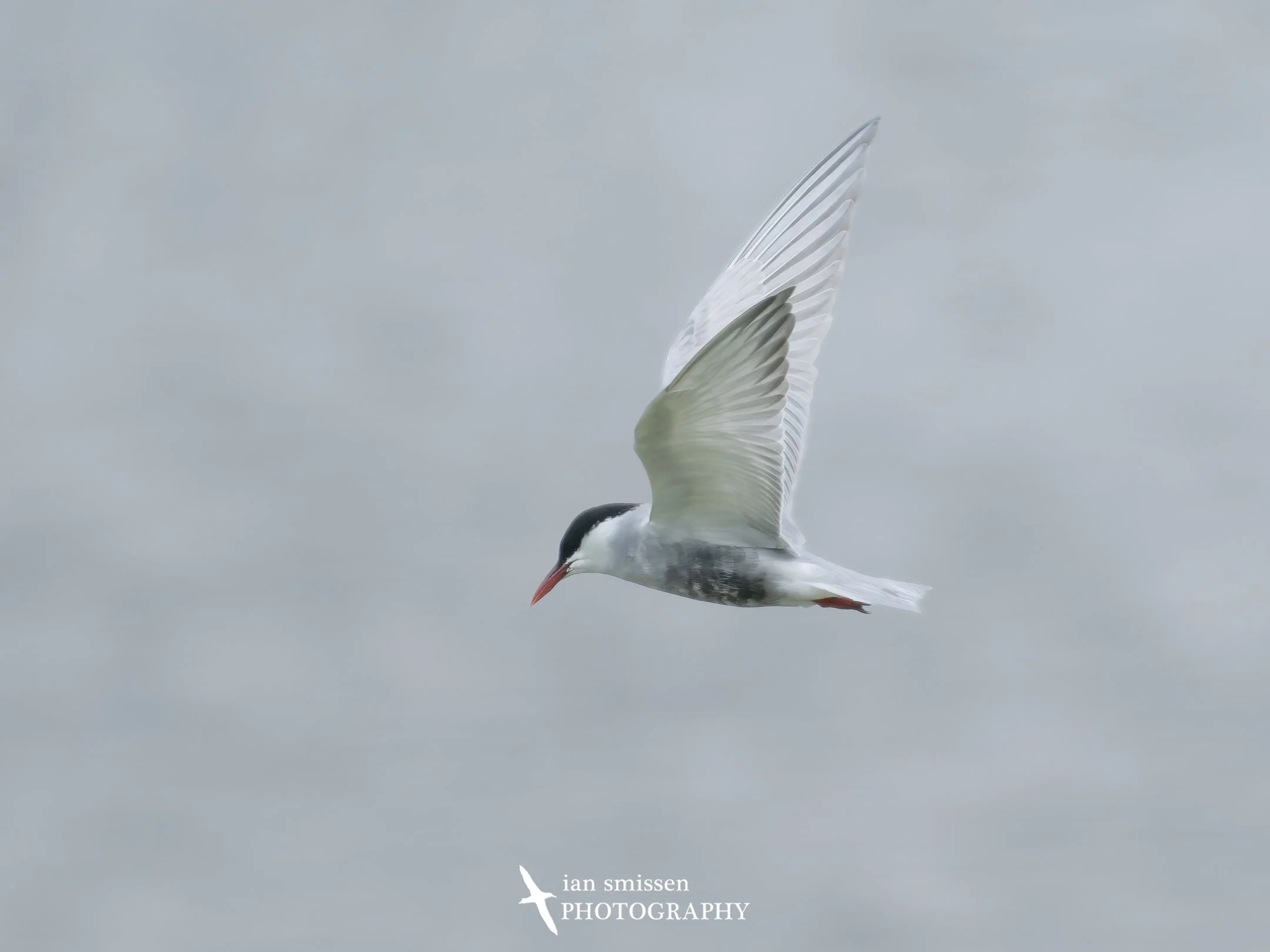
Whiskered Tern
Lake Boga, Victoria
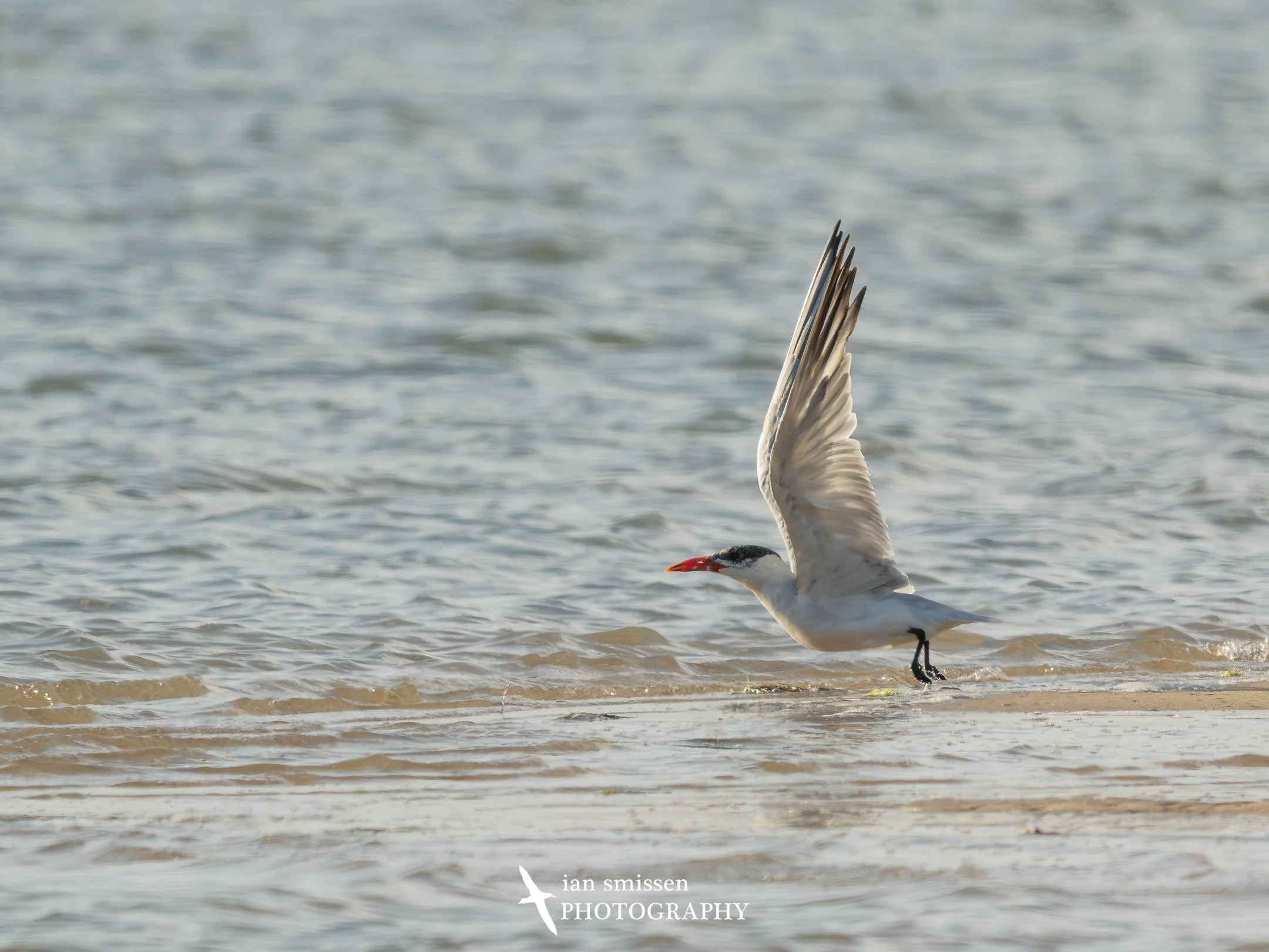
After lunch I set up camp on the opposite shore of the lake where for a few dollars you can camp right on the lakeshore. Whiskered and Caspian Terns were flying along the shore in search of food for the whole afternoon so I sat on the shore with the camera and grabbed a few shots.
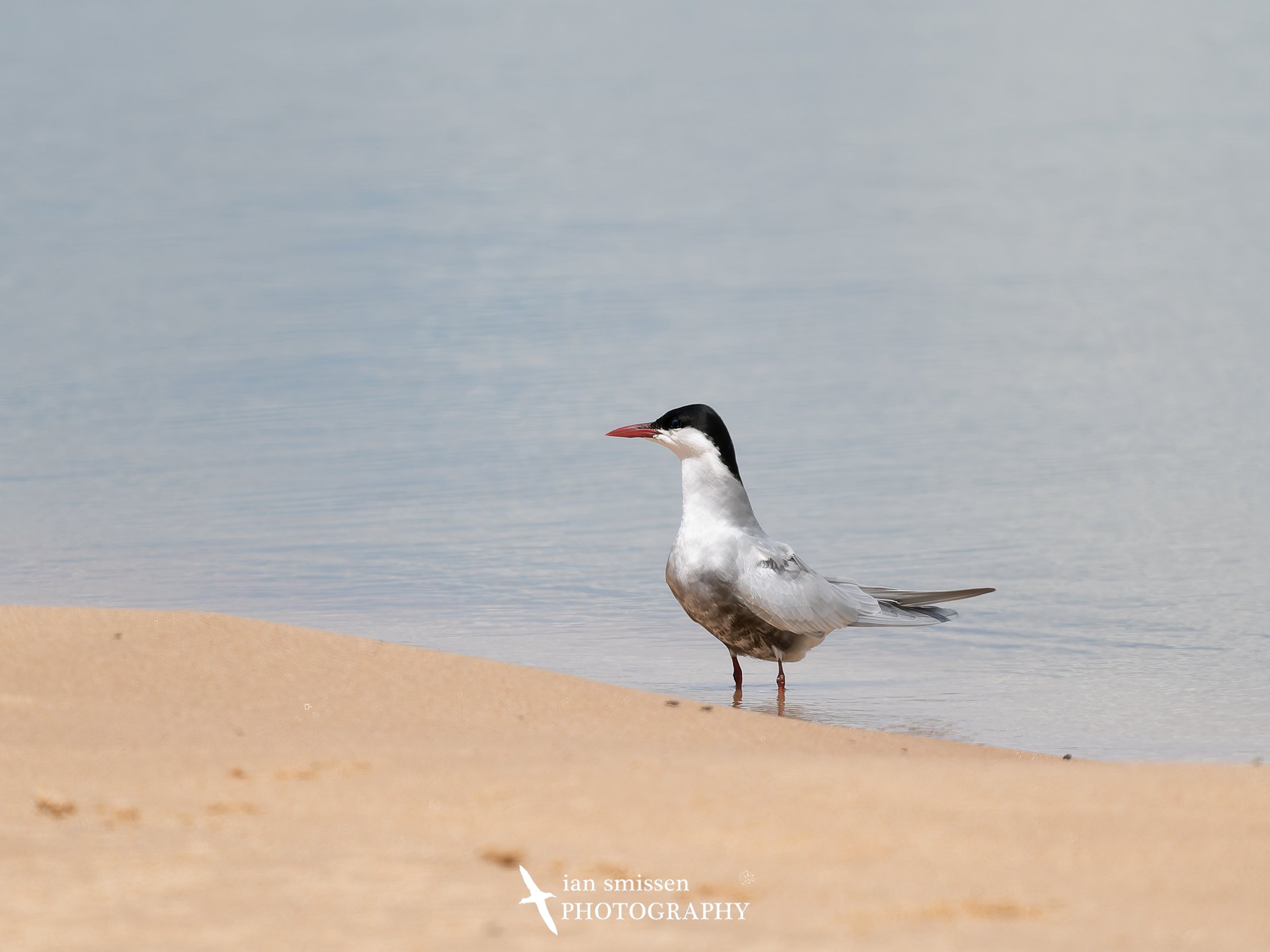
Whiskered Tern
Lake Boga, Victoria
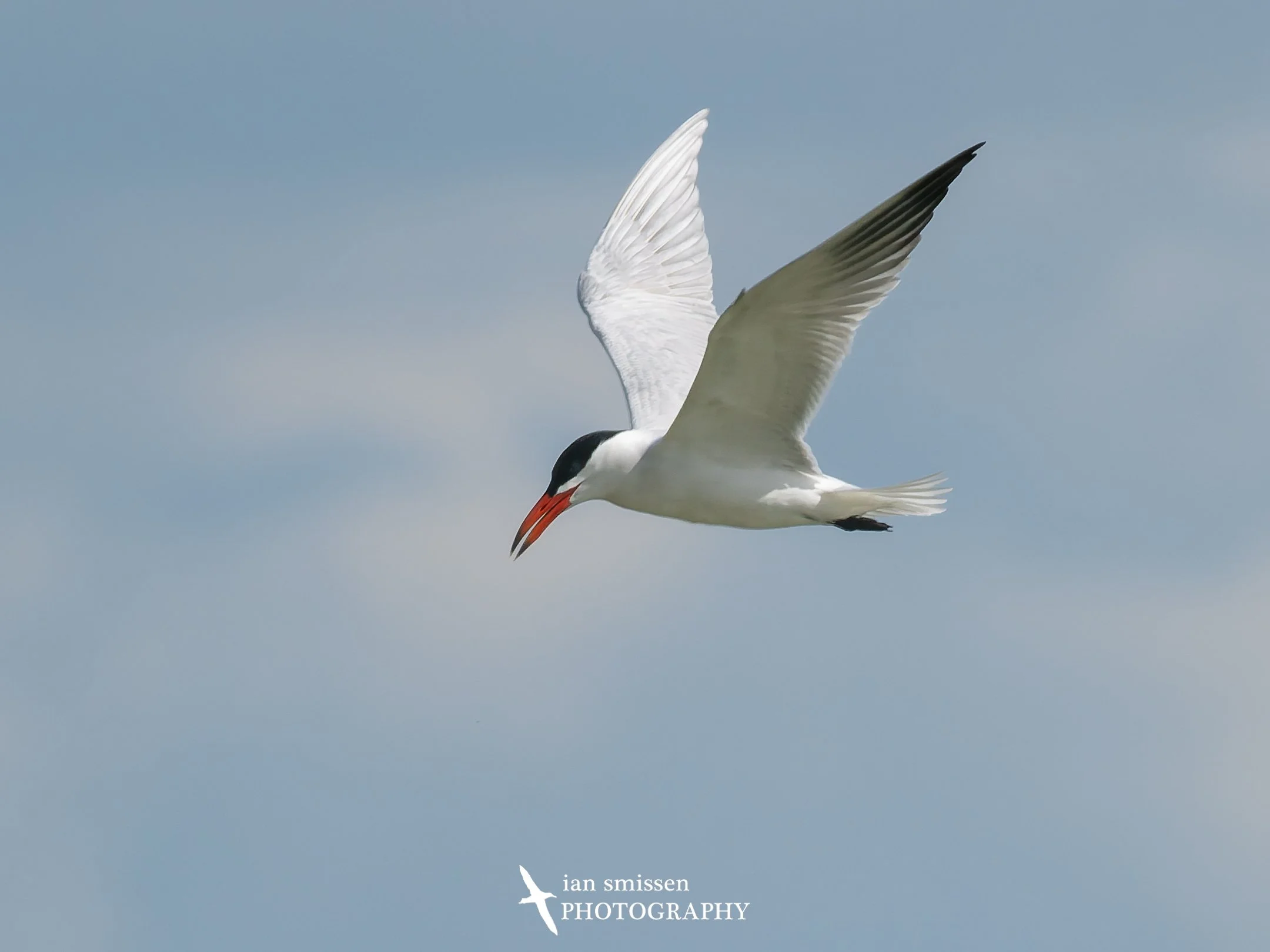
Caspian Tern
Lake Boga, Victoria
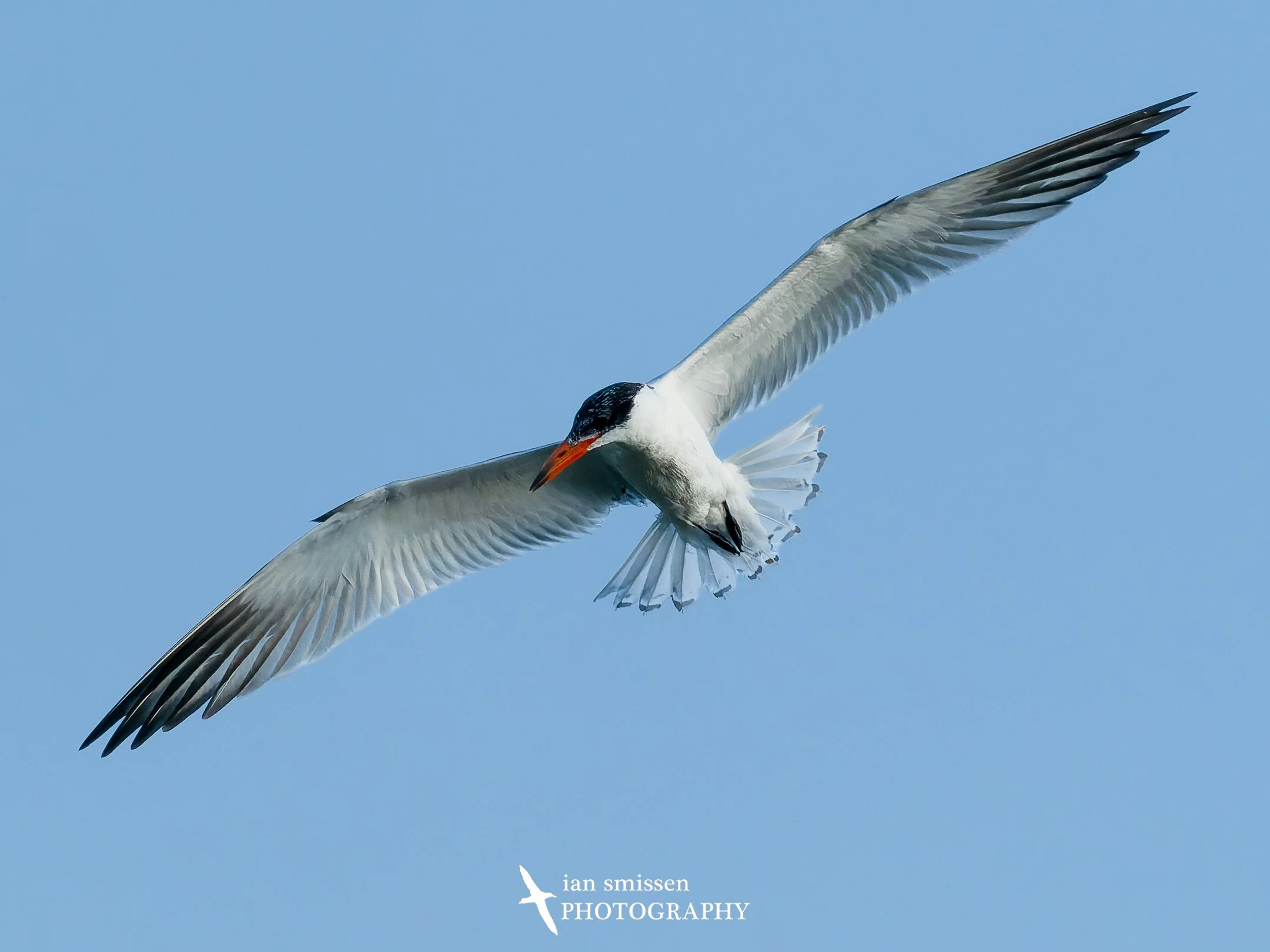
Caspian Tern
Lake Boga, Victoria
There were also several Great Crested Grebe fishing among the reeds on the shoreline.
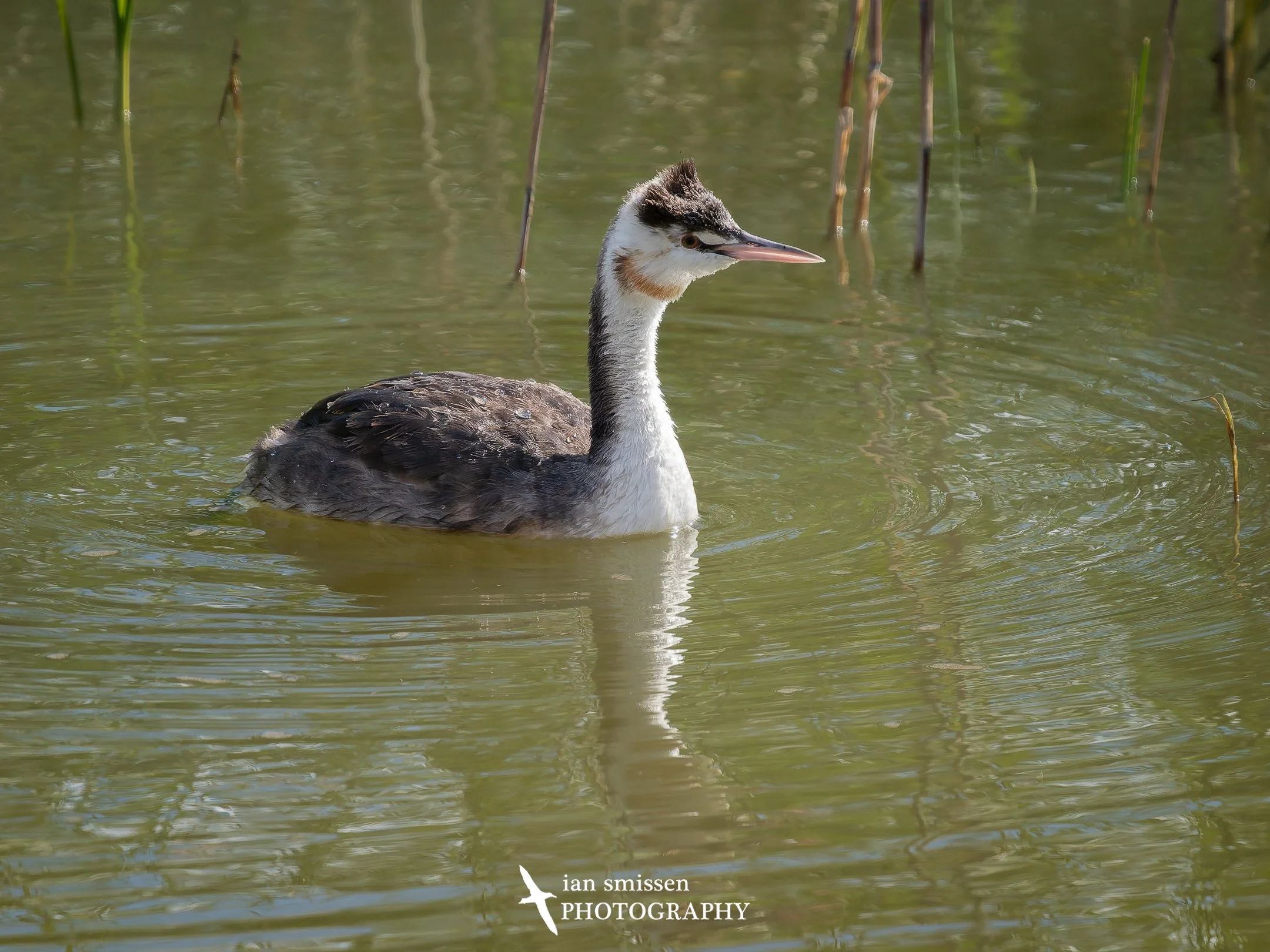
Great Crested Grebe
Lake Boga, Victoria
After a very pleasant afternoon with the terns and grebes, I was treated to a beautiful sunset.
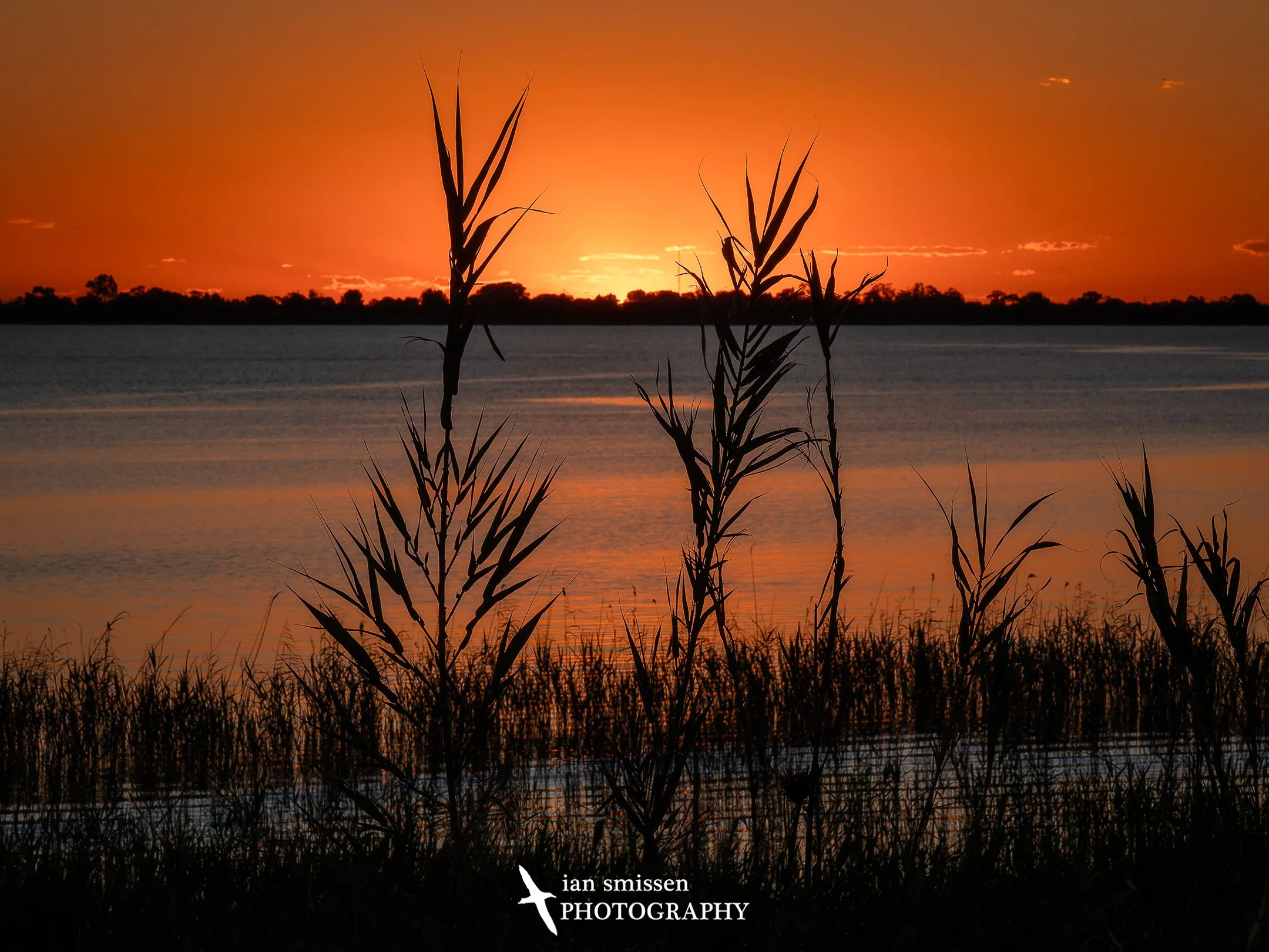
Lake Boga, Victoria
Monday 19 October
Tresco West Bushland Reserve
Monday morning and I was determined to find Purple-backed Fairy-wren so I headed to Tresco West, where some of the group had seen them on the Sunday afternoon, when I had remained at Lake Boga photographing terns. No luck with the fairy-wrens but I did find a Blue Bonnet, one of our more elusive parrots.
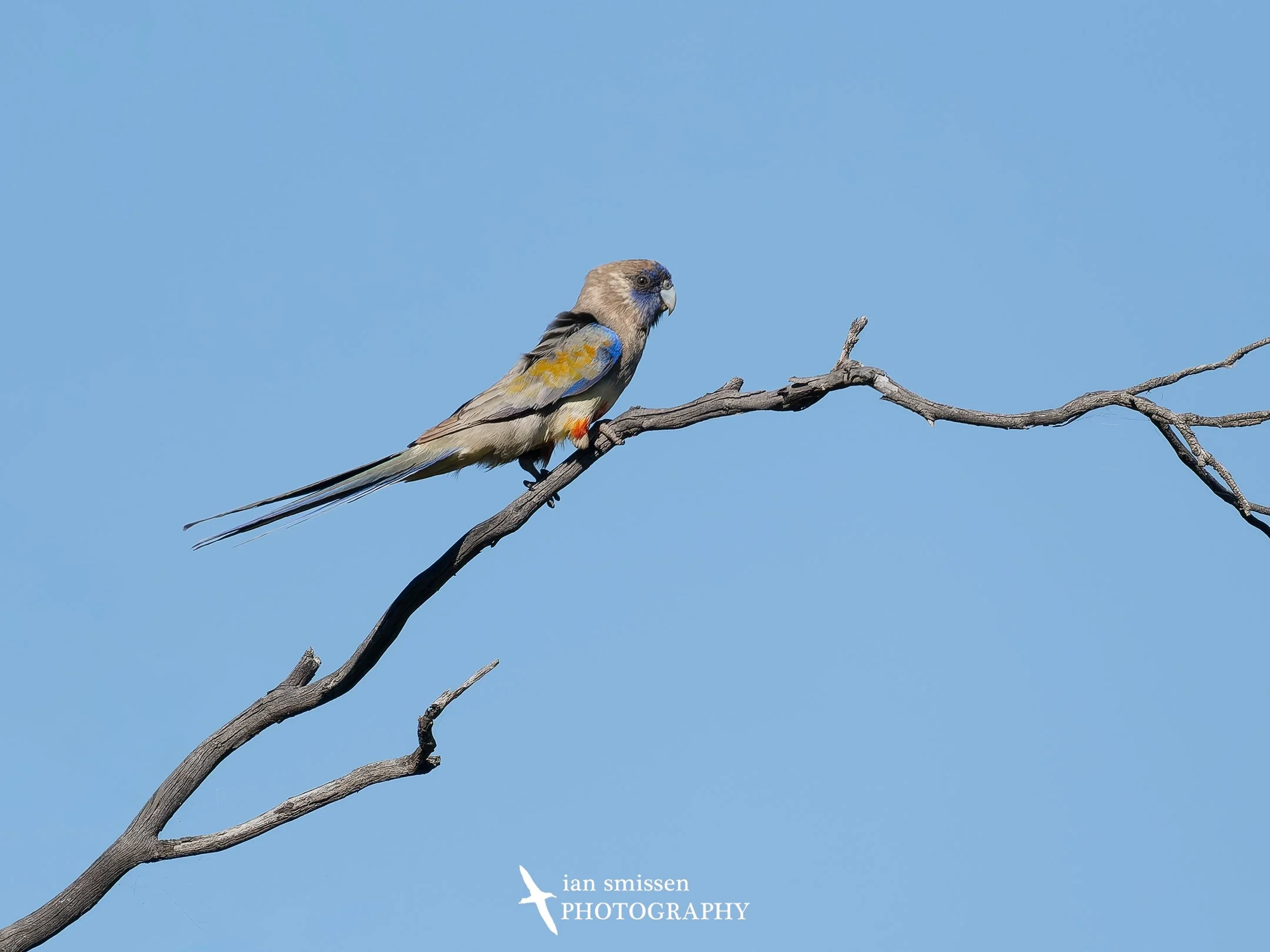
Eastern Blue Bonnet
Tresco West Bushland Reserve, Victoria
Elmore
Plumed Whistling Duck had been seen at the two bunker silo dams at Elmore. I hadn’t photographed this species in Victoria previously so headed there as my last stop on the drive home. There were a lot of ducks on both dams but it was a challenge to find even a half reasonable photograph. It was mid afternoon and hot (>30ºC) so there was a lot of heat haze and at both locations, the ducks were on the other side of the dams. This is the best I could do but it’s a state tick so I’m happy enough.
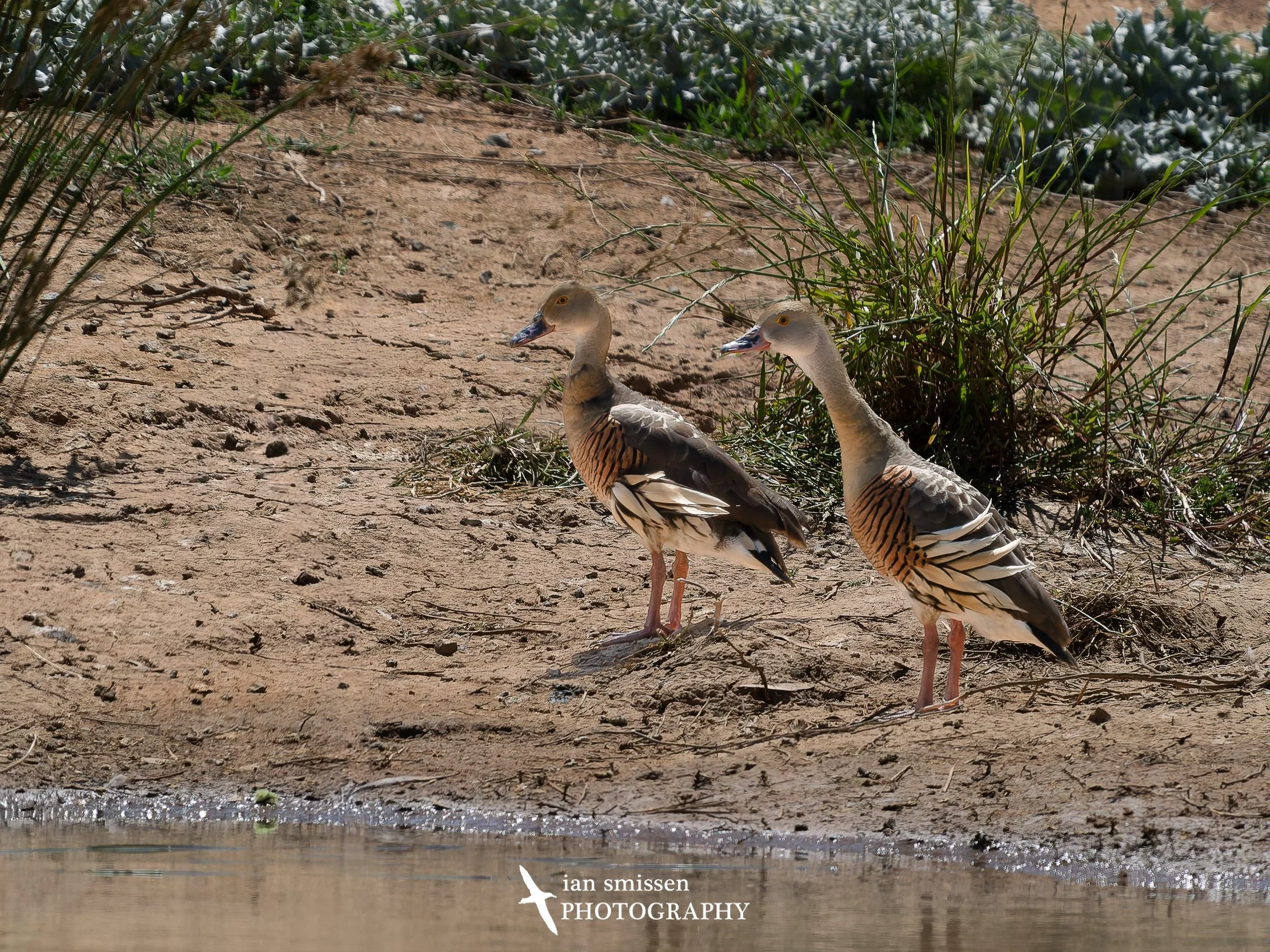
Plumed Whistling Duck
Elmore, Victoria
A fantastic weekend away with a great bunch of people and some nice birds as well. Thanks to Peter and John for their planning and organisation.
Now, to plan another trip t get those pesky Purple-backed Fairy-wren :-)